Methylene blue (methylthioninium chloride) is a pharmaceutical compound with over a century of clinical use, FDA-approved at low doses for the treatment of drug-induced methemoglobinemia.[2] In recent years it has attracted attention among researchers and biohackers interested in its proposed mitochondrial mechanisms, specifically its ability to shuttle electrons within the respiratory chain and its documented monoamine oxidase inhibitory activity.[1] As interest has grown, so has the number of places selling it — from giant e-commerce platforms to specialized nootropic companies to licensed compounding pharmacies.
Where you buy methylene blue matters enormously. Unlike most supplements, methylene blue is a potent pharmaceutical agent with a serious FDA drug-interaction warning for serotonin syndrome when combined with serotonergic drugs, and it is absolutely contraindicated in G6PD deficiency. It is also a compound where purity grade is not merely a marketing claim: industrial and histology-grade methylene blue contains toxic impurities that make it genuinely unsafe for human consumption. Only USP-grade (pharmaceutical-purity) product is appropriate for any human use. This guide compares the main purchasing channels honestly so you can make an informed decision — and know when a physician’s involvement is not optional.
Key Takeaways
- Only USP-grade (pharmaceutical-purity) methylene blue is appropriate for human use; always request a third-party certificate of analysis before purchasing.
- Amazon offers convenience but requires extra scrutiny to distinguish legitimate pharmaceutical-grade products from repackaged reagent or aquarium-grade material.
- Reputable DTC brands that publish COAs and include clear contraindication disclosures offer a reasonable middle ground between marketplace risk and prescription-only access.
- Compounding pharmacies with a physician prescription provide the highest accountability and the safest pathway for anyone taking serotonergic medications or with unknown G6PD status.
- Methylene blue has a serious FDA drug-interaction warning for serotonin syndrome and is absolutely contraindicated in G6PD deficiency — these are not fine-print concerns.
Why Purity Grade Is the First Question to Ask
Methylene blue is widely available as a laboratory reagent, an aquarium treatment for fungal infections, and a histology stain. These industrial and research-grade products are inexpensive and widely distributed, but they are manufactured without the contamination controls that apply to pharmaceutical production. They may contain heavy metals, arsenic, and other process byproducts that no reputable manufacturer tests for because those grades were never intended for human ingestion.
USP-grade methylene blue is produced under Good Manufacturing Practice (GMP) conditions with strict purity specifications — an assay of not less than 98.0 and not more than 103.0 percent on the dried basis, with defined limits on heavy metal content, residual solvents, and microbial contamination. A certificate of analysis (COA) from a qualified third-party laboratory is the minimum documentation a buyer should request. Any seller unwilling or unable to provide a COA from an independent analytical lab should be disqualified regardless of price or branding.
This purity question should be answered before any other comparison. A cheap product from an unverified Amazon seller could be aquarium-grade material repackaged in a nootropic bottle. The color and the powder look identical. The difference is invisible to the consumer and detectable only through analytical chemistry.

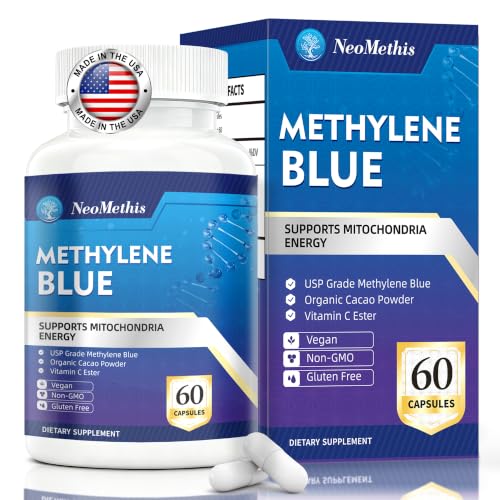
Buying Methylene Blue on Amazon: Convenience With Significant Caveats
Amazon’s marketplace hosts numerous methylene blue listings spanning a wide price range. Some of these are legitimate USP-grade products from established supplement companies that also sell through their own websites; others are third-party resellers whose sourcing is opaque. Amazon’s fulfillment model means that even a legitimate brand’s listing can intermingle inventory from unauthorized sellers through its co-mingled fulfillment program.
When evaluating an Amazon listing, look specifically for: an explicit USP-grade designation on the product label and listing copy, a publicly accessible or readily available COA with third-party assay data, a US-based company with a verifiable address and customer service contact, and customer reviews that are not exclusively five-star with generic language. Be skeptical of any listing priced dramatically below the market average for pharmaceutical-grade material — USP production is genuinely more expensive than reagent-grade manufacturing.

The primary advantages of Amazon are convenience, fast shipping if you have Prime, and a relatively straightforward return process. The primary disadvantages are the difficulty of verifying seller authenticity, the co-mingling risk, and the fact that Amazon does not itself verify purity claims. Amazon is not an inherently bad channel, but it requires more due diligence from the buyer than purchasing directly from a brand you have vetted.
Direct-to-Consumer (DTC) Nootropic Brands
A growing number of DTC supplement and nootropic companies have introduced methylene blue products, typically sold as sublingual tablets, oral solutions, or capsules. Brands in this space generally market to biohackers, longevity enthusiasts, and people interested in cognitive performance. The quality variation across this category is substantial.
The most credible DTC brands publish full COAs on their websites, specify USP grade explicitly, disclose the manufacturer or source of their active pharmaceutical ingredient, and provide clear dosing guidance that acknowledges the non-linear pharmacology of methylene blue — the fact that low doses (typically cited in the range of 0.5 to 4 mg/kg) and high doses above approximately 4 mg/kg can have opposing physiological effects, with high doses paradoxically capable of causing the methemoglobinemia the drug is approved to treat at low doses. A brand that glosses over this dose-response complexity or implies that more is always better should be treated with skepticism.
DTC brands typically offer the best combination of accessibility and transparency for buyers who are not candidates for compounding pharmacy access. Prices are generally higher than Amazon’s lowest listings but reflect real pharmaceutical-grade production costs. Buying directly from the brand also eliminates the co-mingling and reseller risk present on third-party marketplaces. Look for brands that clearly state the concentration per serving, include a serious contraindication disclosure for serotonin syndrome and G6PD deficiency, and do not make disease treatment claims.
Compounding Pharmacies: The Highest-Accountability Option
Licensed compounding pharmacies represent the most rigorous pathway for obtaining methylene blue. A compounding pharmacy prepares customized pharmaceutical formulations using USP-grade active pharmaceutical ingredients, under state board of pharmacy oversight and, for the most regulated compounders, under FDA oversight as well (503B outsourcing facilities). The compounded product is prepared to a physician’s specification for an individual patient.
To obtain methylene blue through a compounding pharmacy, you will need a prescription from a licensed physician. This is not merely a bureaucratic inconvenience — it is a meaningful safety checkpoint. A physician who prescribes methylene blue will review your medication list for serotonergic drug interactions (SSRIs, SNRIs, tramadol, linezolid, certain migraine medications), screen for G6PD deficiency if clinically indicated, and determine an appropriate dose. These are not theoretical precautions; serotonin syndrome is a potentially life-threatening condition, and G6PD-deficient individuals can develop severe hemolytic anemia from a single dose.
The practical disadvantages of compounding pharmacies are cost, the requirement for a physician visit and prescription, and geographic variation in which pharmacies compound methylene blue and which physicians are familiar with it. Telehealth platforms that specialize in longevity or functional medicine have made physician access easier in this space, and some compounding pharmacies work directly with these platforms. For anyone taking serotonergic medications, anyone with unknown G6PD status, or anyone with significant cardiovascular or hepatic conditions, the compounding pharmacy pathway is not just the best option — it should be considered the required one.
Specialty Nootropic Retailers and International Sources
Beyond Amazon and direct brand websites, methylene blue is also sold through specialty nootropic retailers that aggregate products from multiple brands, and through international online pharmacies, primarily from countries where it is sold over the counter as a pharmaceutical. The nootropic retailer channel offers convenience and the ability to compare products side by side, but the same purity-verification questions apply — the retailer’s reputation is only as good as the brands they carry.
International sources present a different set of considerations. In several countries, low-dose methylene blue tablets are sold as licensed pharmaceuticals without a prescription. These products may be legitimately pharmaceutical-grade and subject to that country’s regulatory standards. However, importing pharmaceutical products carries its own regulatory complexity, and the buyer has no straightforward recourse if the product is held in customs, arrives damaged, or turns out not to be what was advertised. For US buyers, the FDA’s personal importation policy creates a gray zone rather than a clear legal pathway.
These channels are worth being aware of but warrant additional research and caution. If you pursue an international pharmaceutical source, research the specific product’s regulatory approval status in its country of origin and verify that the manufacturer is a legitimate licensed pharmaceutical producer.
What to Look for Regardless of Where You Buy
Across all purchasing channels, the checklist is consistent. First, confirm USP grade is explicitly stated — not ‘high purity,’ not ‘99% pure,’ but USP or pharmaceutical grade with a COA to support it. Second, obtain and review the COA: it should show an assay result within the USP specification, heavy metal testing results, and the name of the analytical laboratory that performed the testing. A COA issued by the company itself rather than an independent lab carries less weight. Third, confirm the concentration clearly — methylene blue is sold as powders, solutions at various concentrations (commonly 1% or 0.5%), and tablets. Dosing precision matters with this compound.
Fourth, evaluate the contraindication disclosures. A responsible seller will prominently flag serotonin syndrome risk for anyone on serotonergic medications and G6PD deficiency as an absolute contraindication. The absence of these warnings is a signal about the company’s approach to customer safety. Fifth, check for customer service accessibility and a clear return or quality-issue policy. Sixth, if you are considering any dose above the low end of the commonly discussed range, or if you have any health conditions or take any medications, the conversation with a physician is not optional.
🛒 Where to Buy Methylene Blue
- Troscriptions Blue CannatineLab-tested / studied
sublingual troches, 4 mg methylene blue + 4 mg nicotine + 50 mg caffeine + 200 mg alpha-GPC per troche — Flagship stacked nootropic troche from Troscriptions (founded by physician Ted Achacoso MD); pharmaceutical-grade MB combined with cholinergic and stimulant cofactors; widely regarded as the benchmark MB product in the nootropic community. Confirm drug interaction checklist before use. - Double Wood Supplements Methylene Blue
capsules, 5 mg per capsule — Accessible entry-point brand widely available on Amazon; transparent third-party testing; one of the few capsule-form MB products from an established U.S. supplement company; good for low-dose protocols. - Health Natura Methylene Blue USP Solution
liquid, 0.5% solution, approximately 2.5 mg per 5 drops — Long-standing liquid MB brand; clear USP-grade labeling; 0.5% concentration referenced in historical clinical protocols; glass dropper bottle; available on Amazon. - BulkSupplements Methylene Blue Powder
powder, Variable — sold as raw tested powder; requires accurate milligram scale — Lowest cost-per-dose option for experienced users; lab-tested with published COA; not recommended for anyone new to the compound given the critical importance of accurate low-dose measurement.
As an Amazon Associate we earn from qualifying purchases. Methylene blue grade matters more than price or color: only USP, BP, or EP pharmaceutical grade is appropriate for human use, and aquarium, histology or industrial dye grades are not substitutes. Ask for a lot-specific third-party certificate of analysis with numerical results covering azure B and heavy metals, since a bare percent-purity figure says nothing about the remaining fraction.

A Note on the Evidence
Methylene blue is a potent pharmaceutical compound with documented drug interactions and absolute contraindications, not a benign supplement — anyone taking SSRIs, SNRIs, tramadol, linezolid, or other serotonergic drugs must not use methylene blue without direct physician oversight due to the risk of serotonin syndrome, and individuals with G6PD deficiency must not use it at all. This article is informational only and does not constitute medical advice; consult a qualified physician before using methylene blue, particularly if you take any medications or have any underlying health conditions.
Frequently Asked Questions
Is methylene blue legal to buy without a prescription in the United States?
Low-dose methylene blue sold as a supplement exists in a regulatory gray area — it is not FDA-approved as a dietary supplement and is not scheduled as a controlled substance. The FDA’s primary approval is as a drug for methemoglobinemia treatment. Purchasing small quantities for personal use is generally tolerated, but it is not unambiguously legal as a supplement, and compounding pharmacies will require a prescription for a patient-specific preparation.
What does 'USP grade' actually mean for methylene blue?
USP grade means the product meets the purity and quality standards published in the United States Pharmacopeia, the official compendium of pharmaceutical standards. For methylene blue, this includes an assay specification (not less than 98.0 percent and not more than 103.0 percent, on the dried basis), defined limits on heavy metal content including arsenic and lead, and microbial standards. Manufacture under GMP conditions is expected. This is the baseline requirement for any product intended for human use.
Why is serotonin syndrome a concern with methylene blue?
Methylene blue is a potent monoamine oxidase inhibitor. MAO inhibitors prevent the breakdown of serotonin, dopamine, and norepinephrine. When combined with drugs that increase serotonin levels — SSRIs, SNRIs, tramadol, linezolid, certain triptans — the result can be dangerously elevated serotonin activity, a condition called serotonin syndrome characterized by agitation, fever, muscle rigidity, and in severe cases, life-threatening cardiovascular and neurological complications. The FDA has issued a Drug Safety Communication on this interaction.
Can I buy methylene blue on Amazon safely?
Buying on Amazon is possible but requires active verification. You must confirm that the specific product is explicitly USP-grade, the brand publishes a third-party COA with assay data, and you are purchasing directly from the brand rather than a third-party reseller. Do not rely on star ratings alone. If you cannot obtain a COA from the seller, do not buy the product regardless of how it is marketed.
What is G6PD deficiency and why does it matter here?
Glucose-6-phosphate dehydrogenase (G6PD) deficiency is a common inherited enzyme deficiency, particularly prevalent in individuals of African, Mediterranean, Middle Eastern, and Southeast Asian ancestry. Methylene blue’s mechanism requires G6PD activity to generate the NADPH needed for it to function as an antioxidant; in G6PD-deficient individuals, the compound instead causes severe oxidative stress in red blood cells, leading to hemolytic anemia. This is an absolute contraindication, not a precaution to manage with lower dosing.
How do compounding pharmacy prices compare to buying directly from a brand?
Compounding pharmacy costs are generally higher than DTC brand pricing because they include the pharmacy’s compounding labor, the prescribing physician’s time (whether through your own provider or a telehealth service), and the individualized nature of the preparation. The premium buys accountability: a licensed pharmacist is legally responsible for the formulation, the source API must meet pharmaceutical standards, and a physician has reviewed your specific clinical situation. For people with any medical complexity, that accountability has genuine value.
References
- Methylene blue: a controversial diagnostic acid and medication? Toxicology Research (2022). PMID 36337249
- The Potentials of Methylene Blue as an Anti-Aging Drug. Cells (2021). PMID 34943887
These statements have not been evaluated by the Food and Drug Administration. This information is not intended to diagnose, treat, cure, or prevent any disease. Content is for informational purposes only and is not medical advice; consult a qualified healthcare provider before starting any supplement. As an Amazon Associate we earn from qualifying purchases.