Methylene blue is one of the oldest synthetic drugs still in medical use — first synthesized in 1876 and still FDA-approved today as a treatment for methemoglobinemia, a condition in which hemoglobin loses its ability to carry oxygen. In recent years it has attracted serious interest from researchers and biohackers exploring its effects on mitochondrial function, cognitive performance, and neuroprotection. That long history and FDA status can create a false sense of simplicity. Methylene blue is a potent monoamine oxidase inhibitor with real drug interactions, absolute contraindications, and dose-dependent toxicity that inverts its own therapeutic effect at higher doses.
This article is not a recommendation to take methylene blue. It is a structured safety checklist designed to help a curious beginner understand what must be ruled out before the substance is appropriate to consider, what product form is required for human use, and what the honest limits of current evidence are. Work through every item on this list and review it with a qualified clinician before purchasing anything.
Key Takeaways
- Methylene blue is a potent MAO inhibitor that is absolutely contraindicated with SSRIs, SNRIs, tramadol, linezolid, St. John’s Wort, and other serotonergic agents due to risk of serotonin syndrome.
- G6PD deficiency is an absolute contraindication; instead of treating methemoglobinemia, methylene blue causes severe hemolytic anemia in G6PD-deficient individuals.
- Only USP pharmaceutical-grade methylene blue with a third-party Certificate of Analysis is appropriate for human use; laboratory and industrial grades contain toxic impurities.
- Paradoxical methemoglobinemia is an overdose effect: the FDA label documents it at cumulative doses of 7 mg/kg or more, with hypotension and reduced oxygenation from single doses of 3 mg/kg or more, against an approved dose of 1 mg/kg[1] — always calculate dose in mg/kg and verify your solution’s concentration.
- Human evidence for cognitive and longevity benefits in healthy adults remains preliminary; proposed mechanisms are plausible but not established by large controlled trials.
What Methylene Blue Actually Does in the Body
At the cellular level, methylene blue is proposed to act as a redox-cycling electron carrier. It can accept electrons from NADH within the mitochondrial electron transport chain and donate them directly to cytochrome c, effectively providing an alternative route that bypasses damaged or inefficient segments of Complex I and Complex III.[2] This shuttling behavior is thought to support ATP production and reduce the electron leak that generates reactive oxygen species under stressed conditions.
At low doses — generally cited in the range of 0.5 to 4 mg per kilogram of body weight — methylene blue also appears to scavenge certain reactive oxygen species directly and has been investigated for its ability to inhibit tau protein aggregation, a hallmark of several neurodegenerative diseases.[3] At the same time, it is a well-characterized, potent inhibitor of monoamine oxidase A and B, the enzymes responsible for breaking down serotonin, dopamine, and norepinephrine. This MAO inhibition is the mechanism behind its most dangerous drug interaction.[4][5]
It is worth stating plainly that while these mechanisms are pharmacologically plausible and supported by in vitro and some animal work, the body of controlled human clinical evidence is still limited in size and scope. Proposed cognitive and longevity benefits in healthy adults remain investigational.[6]
Checklist Item 1 — Confirm You Are Not Taking Serotonergic Medications
This is the highest-priority item on the checklist and the one with the most serious potential consequence. The FDA has issued a drug safety communication warning that methylene blue given intravenously can cause serotonin syndrome when combined with serotonergic drugs. Because methylene blue potently inhibits MAO-A, the enzyme that degrades serotonin in the synapse, combining it with any agent that increases serotonin availability can produce a dangerous and potentially life-threatening excess of serotonergic signaling.[1][7]

The drug classes and specific agents of concern include: all SSRIs (fluoxetine, sertraline, escitalopram, paroxetine, citalopram, fluvoxamine); all SNRIs (venlafaxine, duloxetine, desvenlafaxine); MAO inhibitors prescribed for depression or Parkinson’s disease (phenelzine, tranylcypromine, selegiline, rasagiline); tramadol, which has serotonin-releasing properties; linezolid, an antibiotic that also inhibits MAO; and St. John’s Wort, a widely used herbal supplement with serotonin reuptake inhibiting activity. If you take any of these, methylene blue is contraindicated. This is not a matter of dose optimization — it is a hard stop.[1][8]
Checklist Item 2 — Rule Out G6PD Deficiency
Glucose-6-phosphate dehydrogenase (G6PD) deficiency is the most common enzyme deficiency in humans, affecting an estimated 400 million people worldwide[9][10] and occurring at much higher prevalence in populations with ancestry from sub-Saharan Africa, the Mediterranean, the Middle East, and Southeast Asia. In people with G6PD deficiency, red blood cells cannot adequately regenerate NADPH, which is required to maintain the glutathione-based antioxidant system that protects the cell membrane.
Methylene blue depends on NADPH to cycle between its oxidized and reduced forms. In a G6PD-deficient individual, this cycling cannot occur normally, and instead of treating methemoglobinemia, methylene blue causes oxidative damage to red blood cells, triggering acute hemolytic anemia. This is an absolute contraindication.[1][11] If you do not know your G6PD status and belong to a demographic with elevated prevalence, a simple blood test before considering methylene blue is essential. Do not skip this step.
Checklist Item 3 — Understand the Dose-Toxicity Inversion
One of the most counterintuitive facts about methylene blue is that the dose required to treat methemoglobinemia (1 mg/kg intravenously, repeatable once)[1] is very different from the dose at which the drug paradoxically causes methemoglobinemia — but the gap is narrower than the figure usually quoted online. At overdose levels methylene blue itself oxidizes hemoglobin iron from the ferrous to the ferric state, producing the same oxygen-transport failure it is approved to reverse; the FDA label records mild methemoglobinemia (up to 7%) at cumulative doses of 7 mg/kg or more, and reports hypotension, wheezing and reduced oxygenation already at single doses of 3 mg/kg or more[1].
The widely repeated 4 mg/kg “paradoxical threshold” is a real number bound to the wrong mechanism. It is a UK National Poisons Information Service maximum dose, adopted after a case of methylene blue toxicity at 7.5 mg/kg that presented as expressive aphasia, confusion and disinhibition — and in which methaemoglobinaemia was specifically excluded as the cause[12]. It caps neurologic and serotonergic toxicity rather than methemoglobin formation, and the FDA’s lower figures are what matter first when calculating a dose.
In the oral supplementation context, doses circulating in biohacking communities typically range from 0.5 mg to a few milligrams total — far below the toxic threshold for an average adult. However, the practical risk is in the product concentration. Many commercial solutions are sold at concentrations of 1% (10 mg/mL) or higher. A dosing error, a mislabeled product, or simple miscalculation can produce unexpectedly high doses. Always calculate your intended dose in milligrams per kilogram of body weight, not in drops or milliliters without knowing the exact concentration of your solution.
Checklist Item 4 — Verify Pharmaceutical-Grade Purity (USP Grade)
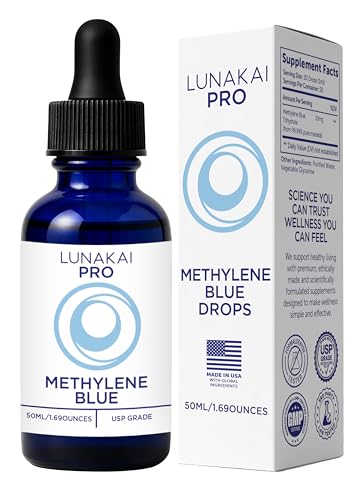
Methylene blue is sold for several completely different purposes: as a biological stain in histology labs, as a dye in industrial and textile applications, and as a pharmaceutical product for human use. Only USP-grade (United States Pharmacopeia) or equivalent pharmaceutical-grade material is appropriate for ingestion. Industrial and laboratory-grade methylene blue regularly contains heavy metals, arsenic, zinc, and other process impurities that are acceptable for staining tissue slides but are toxic when consumed.
When evaluating a supplier, look for a Certificate of Analysis (CoA) from an independent third-party laboratory that confirms: identity as methylthioninium chloride, pharmaceutical-grade purity (typically 99% or higher), and testing for heavy metals and residual solvents at acceptable limits. A product labeled only as ‘lab grade,’ ‘reagent grade,’ or ‘for research use only’ is not appropriate for human consumption regardless of price or marketing language on the website. This is a non-negotiable quality standard, not a preference.
Checklist Item 5 — Additional Precautions and Populations Who Should Not Use It
Beyond the hard contraindications above, several additional populations face elevated risk. Pregnant and breastfeeding women should avoid methylene blue entirely; intra-amniotic injection has been associated with fetal harm, and there is insufficient human data on oral use in pregnancy to support any safe dose claim. Individuals with renal impairment should be cautious because methylene blue and its metabolite azure B are renally cleared; impaired excretion raises effective exposure.
People with known hypersensitivity to phenothiazine compounds may experience allergic reactions. Those with pre-existing cardiac arrhythmias should note that high-dose methylene blue has been associated with cardiac effects in surgical case series. Finally, methylene blue is a powerful urine, stool, and skin dye — it will turn urine and sometimes stools blue or green at any meaningful dose. This is expected and harmless but can be alarming if unanticipated. It can also temporarily affect the accuracy of pulse oximeter readings, which measure oxygen saturation optically and can be interfered with by the dye’s absorption spectrum.
🛒 Where to Buy Methylene Blue
- Troscriptions Blue CannatineLab-tested / studied
sublingual troches, 4 mg methylene blue + 4 mg nicotine + 50 mg caffeine + 200 mg alpha-GPC per troche — Flagship stacked nootropic troche from Troscriptions (founded by physician Ted Achacoso MD); pharmaceutical-grade MB combined with cholinergic and stimulant cofactors; widely regarded as the benchmark MB product in the nootropic community. Confirm drug interaction checklist before use. - Double Wood Supplements Methylene Blue
capsules, 5 mg per capsule — Accessible entry-point brand widely available on Amazon; transparent third-party testing; one of the few capsule-form MB products from an established U.S. supplement company; good for low-dose protocols. - Health Natura Methylene Blue USP Solution
liquid, 0.5% solution, approximately 2.5 mg per 5 drops — Long-standing liquid MB brand; clear USP-grade labeling; 0.5% concentration referenced in historical clinical protocols; glass dropper bottle; available on Amazon. - BulkSupplements Methylene Blue Powder
powder, Variable — sold as raw tested powder; requires accurate milligram scale — Lowest cost-per-dose option for experienced users; lab-tested with published COA; not recommended for anyone new to the compound given the critical importance of accurate low-dose measurement.
As an Amazon Associate we earn from qualifying purchases. Methylene blue grade matters more than price or color: only USP, BP, or EP pharmaceutical grade is appropriate for human use, and aquarium, histology or industrial dye grades are not substitutes. Ask for a lot-specific third-party certificate of analysis with numerical results covering azure B and heavy metals, since a bare percent-purity figure says nothing about the remaining fraction.


A Note on the Evidence
The evidence base for oral methylene blue in healthy adults is still early-stage, consisting largely of small trials, animal studies, and mechanistic in vitro work; robust long-term human safety data at common supplemental doses do not yet exist. Anyone with a chronic health condition, anyone taking any prescription or over-the-counter medication, and anyone who has not confirmed their G6PD status should consult a qualified clinician before considering methylene blue — this article is informational only and does not constitute medical advice.
Frequently Asked Questions
Can I take methylene blue if I drink alcohol regularly?
Alcohol is not a direct pharmacological contraindication in the same category as serotonergic drugs or G6PD deficiency, but alcohol is metabolized in a way that generates oxidative stress and NADH imbalance, both of which interact with the same redox pathways methylene blue affects. Heavy alcohol use also depletes the antioxidant capacity that makes low-dose methylene blue potentially beneficial. This is an area without strong human data specific to methylene blue; a clinician who can review your full health picture is the appropriate person to advise you.
Is there a safe starting dose for healthy adults?
No universally validated oral dose for healthy adults has been established in clinical guidelines because oral methylene blue for nootropic use is investigational, not an approved indication. The doses most frequently cited in research contexts range from 0.5 to 4 mg/kg, with some researchers suggesting that lower doses in the sub-1 mg/kg range may be more appropriate for cognitive applications. Because commercial solutions vary in concentration, the single most important step before any dose is confirming the exact mg/mL concentration of your solution and calculating the resulting mg/kg dose for your body weight.
Why does methylene blue turn urine blue or green?
Methylene blue is a synthetic dye with strong chromogenic properties. The compound and its metabolite azure B are excreted in urine, producing a blue or blue-green color that is dose-dependent and completely expected at any meaningful dose. This is a cosmetic effect with no clinical significance, but it will be visually obvious and can be startling the first time it occurs. It does not indicate toxicity or a problem with the product.
Can methylene blue interfere with medical tests?
Yes. Because methylene blue absorbs light at wavelengths used by pulse oximeters to calculate oxygen saturation, it can cause falsely low SpO2 readings on standard fingertip devices for a period after ingestion. If you require accurate pulse oximetry monitoring for any medical reason, this is clinically relevant. It may also visually obscure colonoscopy findings if a colonoscopy is scheduled within the window of active excretion, though this is a minor and temporary concern.
How do I verify that a supplier is selling pharmaceutical-grade methylene blue?
Ask the supplier directly for a Certificate of Analysis from an independent, ISO-certified laboratory. The CoA should specify the grade (USP or equivalent), confirm purity at 99% or above as methylthioninium chloride, and show quantitative results for heavy metals (lead, arsenic, mercury, cadmium) and residual solvents within pharmacopeial limits. If a supplier cannot provide this document, does not use third-party testing, or lists the product as ‘lab grade’ or ‘for research use only,’ do not purchase it for consumption.
Is methylene blue legal to buy without a prescription?
In the United States, methylene blue is FDA-approved as a prescription drug at the pharmaceutical level (sold as ProvayBlue for IV use), but oral solutions are sold by various supplement and compound pharmacies. The regulatory status varies by jurisdiction and formulation. Legality of purchase is a separate question from safety of use — the absence of a prescription requirement does not indicate that a product is appropriate for everyone or that it lacks serious interactions. Consulting a licensed clinician remains the appropriate step before use regardless of how it is classified for purchase in your country.
References
- U.S. Food and Drug Administration. PROVAYBLUE (methylene blue) injection – full prescribing information: BOXED WARNING (serotonin syndrome), CONTRAINDICATIONS (G6PD deficiency) and DOSAGE. FDA prescribing information (2024). FDA label (PDF)
- Poteet E et al. Neuroprotective actions of methylene blue and its derivatives. PLoS One (2012). PMID 23118969
- Wischik CM et al. Oral Tau Aggregation Inhibitor for Alzheimer’s Disease: Design, Progress and Basis for Selection of the 16 mg/day Dose in a Phase 3, Randomized, Placebo-Controlled Trial of Hydromethylthionine Mesylate. The journal of prevention of Alzheimer’s disease (2022). PMID 36281683
- Ramsay RR et al. Methylene blue and serotonin toxicity: inhibition of monoamine oxidase A (MAO A) confirms a theoretical prediction. British journal of pharmacology (2007). PMID 17721552
- Gillman PK. CNS toxicity involving methylene blue: the exemplar for understanding and predicting drug interactions that precipitate serotonin toxicity. Journal of psychopharmacology (2011). PMID 20142303
- Wischik CM et al. Clinical, imaging and blood biomarker outcomes in a Phase 3 clinical trial of tau aggregation inhibitor hydromethylthionine mesylate in mild cognitive impairment and mild to moderate dementia due to Alzheimer’s disease. The journal of prevention of Alzheimer’s disease (2026). PMID 41570392
- Zuschlag ZD et al. Serotonin Toxicity and Urinary Analgesics: A Case Report and Systematic Literature Review of Methylene Blue-Induced Serotonin Syndrome. Psychosomatics (2018). PMID 30104021
- Izzo AA. Drug interactions with St. John’s Wort (Hypericum perforatum): a review of the clinical evidence. International journal of clinical pharmacology and therapeutics (2004). PMID 15049433
- Nkhoma ET et al. The global prevalence of glucose-6-phosphate dehydrogenase deficiency: a systematic review and meta-analysis. Blood cells, molecules & diseases (2009). PMID 19233695
- Cappellini MD et al. Glucose-6-phosphate dehydrogenase deficiency. Lancet (2008). PMID 18177777
- McDonagh EM et al. PharmGKB summary: methylene blue pathway. Pharmacogenetics and genomics (2013). PMID 23913015
- Martindale SJ, Stedeford JC. Methylene blue toxicity following infusion to localize parathyroid adenoma. The Journal of Laryngology and Otology (2006). PMID 16359577
These statements have not been evaluated by the Food and Drug Administration. This information is not intended to diagnose, treat, cure, or prevent any disease. Content is for informational purposes only and is not medical advice; consult a qualified healthcare provider before starting any supplement. As an Amazon Associate we earn from qualifying purchases.