Methylene blue (MB) is a century-old pharmaceutical compound, FDA-approved since 2016 for methemoglobinemia, with a pharmacological property that has attracted serious modern clinical interest: at therapeutic doses it potently inhibits the nitric oxide (NO)–cyclic GMP (cGMP) signaling axis, the principal molecular switch governing vascular smooth-muscle relaxation. When this pathway becomes pathologically overactivated — as in septic shock, vasoplegic syndrome after cardiac surgery, or refractory anaphylaxis — blood vessels lose their tone and standard vasopressors frequently fail. Methylene blue offers a mechanistically distinct rescue option.
This article surveys the biochemistry connecting MB to NO signaling, summarizes the clinical scenarios where that interaction matters most, and honestly appraises the weight of current evidence. It is written for informational purposes only; nothing here constitutes medical advice, and any use of methylene blue in a clinical context must be directed by a qualified physician.
Key Takeaways
- Methylene blue restores vascular tone by inhibiting soluble guanylate cyclase and nitric oxide synthase, reducing cGMP-driven smooth-muscle relaxation.
- Vasoplegic syndrome after cardiac surgery and septic shock — both states of excess NO-driven vasodilation — are the primary clinical contexts where MB’s mechanism is most directly applicable [1][2].
- A 2024 meta-analysis of randomized trials found MB associated with reduced mortality in critically ill and perioperative patients [3], though individual trials remain small.
- MB is absolutely contraindicated in G6PD deficiency and carries a serious FDA serotonin-syndrome warning with serotonergic medications; it is a potent MAO inhibitor.
- Only USP-grade pharmaceutical methylene blue is appropriate for human use; industrial or histology-grade preparations contain toxic impurities.
The Nitric Oxide–cGMP Cascade: How the Body Dilates Blood Vessels
Nitric oxide is a short-lived gaseous signaling molecule synthesized from L-arginine by nitric oxide synthase (NOS) enzymes in endothelial cells, neurons, and — critically during systemic inflammation — macrophages and other immune cells expressing inducible NOS (iNOS). Once produced, NO diffuses across cell membranes into adjacent vascular smooth-muscle cells, where it binds to and activates soluble guanylate cyclase (sGC). Activated sGC converts GTP to the second messenger cyclic GMP (cGMP), which activates protein kinase G, reduces intracellular calcium, and promotes smooth-muscle relaxation — the cellular basis of vasodilation.
Multiple physiological vasoactive agents operate through this pathway. Vasoactive intestinal peptide (VIP) stimulates cGMP formation in rat tissues through a mechanism dependent on NOS and cytosolic guanylate cyclase [4]. Alpha-calcitonin gene-related peptide relaxes rat thoracic aorta partly by releasing NO, which then activates both adenylate cyclase and guanylate cyclase [5]. Research comparing NOS inhibition, guanylate cyclase inhibition, and potassium-channel blockade in rat vascular preparations confirms that all three points in this signaling cascade are pharmacologically accessible targets for modulating vascular tone [6].
An important downstream element is the calcium-activated potassium (BKCa) channel. Elevated cGMP opens these channels, hyperpolarizing the smooth-muscle cell membrane and sustaining relaxation. Studies in rat aorta show that NO-induced hyporesponsiveness to the vasoconstrictor phenylephrine — the cellular equivalent of vasopressor resistance — involves both sGC activation and BKCa channel opening, meaning that excess NO can produce a prolonged refractory state rather than a brief, reversible dilation [7].
How Methylene Blue Interrupts the Nitric Oxide Signal
Methylene blue inhibits both NOS and, more potently, sGC, thereby suppressing cGMP production and restoring smooth-muscle contractility. Inhibition of guanylate cyclase has been demonstrated in comparative in-vitro studies to be a robust mechanism for reversing NO-mediated vasodilation in rat vascular tissue [6]. By targeting sGC — the amplification step where a transient gaseous messenger is converted into a sustained intracellular second messenger — MB interrupts vascular relaxation at a strategic choke point.


It is worth noting that not all vasodilatory mechanisms are NO-cGMP-dependent. Studies of photorelaxation in vascular tissue show that some dilatory responses are not attenuated by inhibiting the NO-cGMP pathway [8]. This is a practical reminder that MB will be most effective when pathological vasodilation is genuinely NO-cGMP-driven, as in endotoxemia or post-bypass vasoplegic syndrome, and may be less effective in conditions where other vasodilatory mechanisms predominate.
The Double-Edged Role of Nitric Oxide in Endotoxemia and Septic Shock
Septic shock is one of the most pressing clinical contexts for MB’s NO-blocking activity. During gram-negative sepsis, bacterial lipopolysaccharide triggers iNOS expression across multiple cell types, producing NO at concentrations that far exceed normal physiological signaling. The result is profound, catecholamine-resistant vasodilation and hemodynamic collapse.
However, the relationship between NO and cardiac function in endotoxemia is not straightforward. Research in endotoxemic rats demonstrated that pharmacological inhibition of NOS synthesis actually caused myocardial ischemia, suggesting that endogenous NO retains cardioprotective roles even in the midst of sepsis [9]. This paradox underscores why complete, indiscriminate NOS blockade can be harmful — and why a drug that targets downstream sGC, or is dosed carefully, may restore vascular tone with less risk of cardiac injury.
Preclinical work has examined MB specifically in neonatal septic shock: a study in neonate pigs evaluated MB as a treatment adjunct in this setting [10], contributing to the animal-model evidence base. A 2026 narrative review consolidating pharmacological and clinical data concluded that MB holds a plausible and growing role in the management of septic shock, while emphasizing that prospective trial data remain limited [2].
Vasoplegic Syndrome After Cardiothoracic Surgery
Vasoplegic syndrome — severe, catecholamine-resistant systemic vasodilation occurring after cardiopulmonary bypass — represents a well-characterized clinical niche for methylene blue. A comprehensive 2020 review of vasoplegic syndrome after cardiothoracic surgery described its pathophysiology as involving excess NO production and cGMP accumulation, and catalogued MB among the agents with the most direct mechanistic rationale for use [1]. Because affected patients are often unresponsive to high-dose vasopressors, a mechanistically distinct intervention is clinically valuable.
The cardiac-surgery setting also provides one of the more controllable environments for studying MB: patients are in intensive care with continuous hemodynamic monitoring, the syndrome’s onset is predictable relative to the procedure, and the exposure to cardiopulmonary bypass is a known trigger. This has allowed accumulation of comparative trial data that now enter meta-analyses examining survival outcomes.
Meta-Analytic Evidence: Mortality and Hemodynamic Outcomes
The strongest aggregate evidence for MB in shock states comes from meta-analyses of randomized controlled trials. A 2024 meta-analysis pooling randomized trial data found that methylene blue was associated with reduced mortality in critically ill and perioperative patients, suggesting that the hemodynamic rescue it provides translates into a survival signal rather than merely improving monitor numbers [3]. Because it aggregated randomized rather than purely observational data, this analysis provides more reliable causal inference than earlier case series.

A 2023 systematic review with meta-analysis compared MB to hydroxocobalamin — another rescue agent that addresses excess NO by binding it directly rather than blocking its receptor enzyme — for vasodilatory hypotension in shock [11]. Both agents target excess NO through different mechanisms, and their comparative effectiveness and adverse-effect profiles are of active clinical interest as intensivists weigh options in refractory cases.
A 2025 systematic review specifically examined MB in cardiogenic shock and cardiac arrest, extending the evidence beyond septic and vasoplegic contexts into scenarios where low cardiac output rather than pure vascular tone loss is the primary driver [12]. The picture that emerges is nuanced: hemodynamic context likely determines which patients are most likely to benefit from NO-pathway inhibition.
Safety, Contraindications, and Practical Limits of the Evidence
Methylene blue carries a serious FDA drug-interaction warning for serotonin syndrome when co-administered with serotonergic drugs — SSRIs, SNRIs, tramadol, linezolid, and related agents — because MB is a potent monoamine oxidase inhibitor. In a population of critically ill patients who may be on antidepressants, careful medication reconciliation before MB administration is mandatory, not optional.
G6PD deficiency is an absolute contraindication. MB exerts its redox effects partly through a cycling mechanism that depends on NADPH; in cells unable to regenerate NADPH due to G6PD deficiency, this same mechanism triggers severe hemolytic anemia. Paradoxically, doses above approximately 4 mg/kg can cause the methemoglobinemia that low-dose MB is FDA-approved to treat, so the therapeutic window matters critically.
For any clinical or research application, only USP-grade (pharmaceutical-purity) methylene blue is appropriate for human use; industrial and histology-grade preparations contain impurities that are unsafe for parenteral or enteral administration. Finally, while the meta-analytic evidence is encouraging [3], the individual randomized trials contributing to these analyses are generally small, and the evidence base is concentrated in cardiac-surgery and ICU settings that may not generalize to all shock etiologies or patient populations.
🛒 Where to Buy Methylene Blue
- Troscriptions Blue CannatineLab-tested / studied
sublingual troches, 4 mg methylene blue + 4 mg nicotine + 50 mg caffeine + 200 mg alpha-GPC per troche — Flagship stacked nootropic troche from Troscriptions (founded by physician Ted Achacoso MD); pharmaceutical-grade MB combined with cholinergic and stimulant cofactors; widely regarded as the benchmark MB product in the nootropic community. Confirm drug interaction checklist before use. - Double Wood Supplements Methylene Blue
capsules, 5 mg per capsule — Accessible entry-point brand widely available on Amazon; transparent third-party testing; one of the few capsule-form MB products from an established U.S. supplement company; good for low-dose protocols. - Health Natura Methylene Blue USP Solution
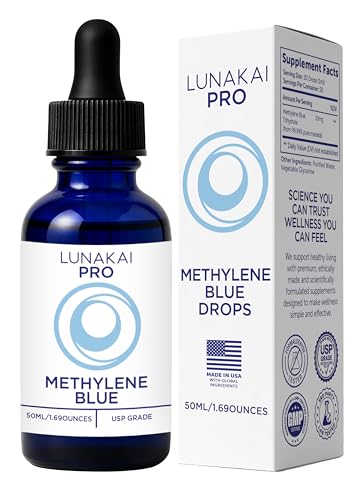
liquid, 0.5% solution, approximately 2.5 mg per 5 drops — Long-standing liquid MB brand; clear USP-grade labeling; 0.5% concentration referenced in historical clinical protocols; glass dropper bottle; available on Amazon. - BulkSupplements Methylene Blue Powder
powder, Variable — sold as raw tested powder; requires accurate milligram scale — Lowest cost-per-dose option for experienced users; lab-tested with published COA; not recommended for anyone new to the compound given the critical importance of accurate low-dose measurement.
As an Amazon Associate we earn from qualifying purchases. Methylene blue grade matters more than price or color: only USP, BP, or EP pharmaceutical grade is appropriate for human use, and aquarium, histology or industrial dye grades are not substitutes. Ask for a lot-specific third-party certificate of analysis with numerical results covering azure B and heavy metals, since a bare percent-purity figure says nothing about the remaining fraction.


A Note on the Evidence
The clinical evidence for methylene blue in shock is encouraging but still limited in scale — most randomized trials are small and conducted in specialized cardiac-surgery or ICU settings, and generalizability to broader shock populations is not yet established. Methylene blue has serious drug interactions with serotonergic medications, is absolutely contraindicated in G6PD deficiency, and must only be used under direct physician supervision with pharmaceutical-grade (USP) material and continuous hemodynamic monitoring; this article is for informational purposes only and does not constitute medical advice.
Frequently Asked Questions
How does methylene blue reverse vasodilatory shock?
MB inhibits soluble guanylate cyclase (sGC), the enzyme that amplifies the NO signal by producing cGMP in vascular smooth-muscle cells. By reducing cGMP, MB prevents the downstream potassium-channel opening and calcium changes that sustain vascular relaxation [6][7]. In shock states driven by excessive nitric oxide, this mechanism can restore vascular resistance when catecholamines have failed.
What is vasoplegic syndrome and why is methylene blue used for it?
Vasoplegic syndrome is a state of severe, catecholamine-resistant systemic vasodilation that can develop after cardiopulmonary bypass, characterized by dangerously low systemic vascular resistance despite normal or elevated cardiac output. Its pathophysiology involves excessive NO production and cGMP accumulation, giving MB a direct mechanistic rationale as a rescue agent [1]. Because affected patients do not respond adequately to standard vasopressors, a mechanistically distinct drug targeting the NO–cGMP axis is clinically valuable.
Does randomized trial evidence support methylene blue for mortality in shock?
A 2024 meta-analysis pooling data from randomized controlled trials found that methylene blue was associated with reduced mortality in critically ill and perioperative patients [3]. This is an encouraging finding, but individual contributing trials were generally small and mostly conducted in cardiac-surgery or intensive-care settings; broader prospective trials are needed before MB can be considered standard of care across all shock subtypes.
How does methylene blue compare to hydroxocobalamin for vasodilatory hypotension?
Both agents address excess-NO vasodilation but through different mechanisms: MB inhibits sGC enzymatically, while hydroxocobalamin scavenges NO by binding it directly. A 2023 systematic review with meta-analysis compared their hemodynamic effects and safety profiles in vasodilatory hypotension [11]. Neither has definitively displaced the other, and the presence of serotonergic medications — which contraindicate MB due to MAO-inhibitor serotonin-syndrome risk — may be a key factor in choosing between them.
Why can blocking nitric oxide be harmful in septic shock?
While excess iNOS-derived NO drives the hemodynamic collapse of septic shock, endogenous NO also plays cardioprotective roles during endotoxemia. Research in endotoxemic rats showed that complete pharmacological inhibition of NOS synthesis actually caused myocardial ischemia [9]. This demonstrates why indiscriminate, total NO blockade can be dangerous and why dosing and mechanistic selectivity — targeting downstream sGC rather than abolishing all NO production — matter when using NO-pathway inhibitors in critically ill patients.
Who should not receive methylene blue?
Patients with G6PD deficiency must not receive MB, as its redox cycling mechanism triggers severe hemolytic anemia in cells that cannot regenerate NADPH. Patients taking serotonergic drugs — including SSRIs, SNRIs, tramadol, and linezolid — face serious risk of life-threatening serotonin syndrome, because MB is a potent MAO inhibitor; the FDA has issued a formal warning for these combinations. Doses above approximately 4 mg/kg can paradoxically cause methemoglobinemia rather than treating it, so careful weight-based dosing and pre-administration screening are essential.

References
- Busse LW et al. Vasoplegic syndrome following cardiothoracic surgery-review of pathophysiology and update of treatment options. Critical care (London, England) (2020). PMID 32019600
- Smith BA et al. From Theory to Therapy: Methylene Blue's Emerging Role in the Management of Septic Shock. Journal of pharmacy practice (2026). PMID 40492955
- Pruna A et al. Methylene Blue Reduces Mortality in Critically Ill and Perioperative Patients: A Meta-Analysis of Randomized Trials. Journal of cardiothoracic and vascular anesthesia (2024). PMID 37880041
- Spessert R et al. Vasoactive intestinal peptide stimulation of cyclic guanosine monophosphate formation: further evidence for a role of nitric oxide synthase and cytosolic guanylate cyclase in rat pinealocytes. Endocrinology (1993). PMID 7684978
- Gray DW et al. Human alpha-calcitonin gene-related peptide stimulates adenylate cyclase and guanylate cyclase and relaxes rat thoracic aorta by releasing nitric oxide. British journal of pharmacology (1992). PMID 1361870
- Abdullah K et al. Comparison of the effects of nitric oxide synthase, guanylate cyclase and potassium channel inhibition on vascular contractions in vitro in the rat. Journal of autonomic pharmacology (1999). PMID 10759331
- Terluk MR et al. Involvement of soluble guanylate cyclase and calcium-activated potassium channels in the long-lasting hyporesponsiveness to phenylephrine induced by nitric oxide in rat aorta. Naunyn-Schmiedeberg's archives of pharmacology (2000). PMID 10832600
- Goud C et al. Photorelaxation is not attenuated by inhibition of the nitric oxide-cGMP pathway. Journal of vascular research (1996). PMID 8695754
- Avontuur JA et al. Inhibition of nitric oxide synthesis causes myocardial ischemia in endotoxemic rats. Circulation research (1995). PMID 7532118
- Gonçalves-Ferri WA et al. Methylene Blue to Neonatal Septic Shock treatment in neonate pigs(). Clinics (Sao Paulo, Brazil) (2022). PMID 36459779
- Brokmeier HM et al. Hydroxocobalamin for Vasodilatory Hypotension in Shock: A Systematic Review With Meta-Analysis for Comparison to Methylene Blue. Journal of cardiothoracic and vascular anesthesia (2023). PMID 37147207
- Batchelor RJ et al. Methylene blue in cardiogenic shock and cardiac arrest: A systematic review. Shock (Augusta, Ga.) (2025). PMID 40961396
These statements have not been evaluated by the Food and Drug Administration. This information is not intended to diagnose, treat, cure, or prevent any disease. Content is for informational purposes only and is not medical advice; consult a qualified healthcare provider before starting any supplement. As an Amazon Associate we earn from qualifying purchases.