In the evolving landscape of biohacking and longevity research, individuals are increasingly seeking compounds that transcend conventional supplements. Many are exploring substances with established pharmacological profiles, driven by a desire for more profound and measurable physiological impacts. This pursuit often leads to agents like pharmaceutical-grade methylene blue, a compound with a long history in medicine but a relatively recent resurgence in interest for its off-label neuroprotective and mitochondrial optimization potential.
The question for many advanced self-experimenters, physicians, and researchers is no longer “if” these compounds work, but “how effectively” and “under what conditions” they operate, alongside a rigorous understanding of their risk profiles. This article aims to provide an evidence-based overview of methylene blue’s benefits, grounded in current scientific literature, to inform those navigating this complex frontier.
FTC Affiliate Disclosure: Please note that this article may contain affiliate links. If you make a purchase through these links, MethyleneBlueHub may earn a commission at no extra cost to you. This helps support our research and content creation efforts.
Understanding Methylene Blue: A Pharmaceutical Overview
Methylene blue (MB) is a tricyclic phenothiazine dye with a rich history, first synthesized in 1876. Its initial applications included use as a histological stain and an antimalarial agent. Today, it remains an FDA-approved medication for treating methemoglobinemia and is also used in surgical procedures as a diagnostic stain.[2]
Its diverse pharmacological actions stem from its ability to cross biological membranes, including the blood-brain barrier. This characteristic enables its influence on various cellular pathways, particularly those related to mitochondrial function and oxidative stress.
Safety First: Essential Considerations for Methylene Blue Use
Before exploring potential benefits, it is crucial to emphasize the safety profile of methylene blue. As a pharmaceutical compound, it possesses significant interactions and contraindications. Individuals with Glucose-6-Phosphate Dehydrogenase (G6PD) deficiency must strictly avoid methylene blue, as it can induce hemolytic anemia, a life-threatening condition.
Methylene blue is a potent monoamine oxidase inhibitor (MAOI), particularly at higher doses.[1] This property necessitates caution when co-administering with serotonergic drugs, such as SSRIs, SNRIs, and tricyclic antidepressants, due to the risk of serotonin syndrome. Consultation with a qualified healthcare professional is paramount before initiating methylene blue, especially for individuals on existing medications.
Common side effects can include discoloration of urine and feces (blue or green), nausea, vomiting, and abdominal pain. Rare but serious side effects include allergic reactions and cardiac arrhythmias. Dosing is highly critical; lower doses (e.g., 0.5-2 mg/kg orally or intravenously) are often considered for off-label applications, significantly below the doses used for methemoglobinemia (e.g., 1-2 mg/kg intravenously).
Methylene Blue and Mitochondrial Optimization
One of the most compelling areas of research for methylene blue centers on its impact on mitochondrial function. Mitochondria are the primary energy producers within cells, and their optimal function is critical for cellular health and longevity.
Mechanism: Electron Carrier in the Electron Transport Chain
Methylene blue acts as an alternative electron acceptor in the mitochondrial electron transport chain (ETC).[3] Specifically, it can accept electrons from NADH within Complex I and donate them to cytochrome c in Complex IV, effectively bypassing dysfunctional segments of the ETC. This “electron cycling” can enhance mitochondrial respiration and ATP production, particularly under conditions of stress or impairment.

Studies have demonstrated that MB can increase oxygen consumption and ATP levels in various cell types and animal models. This enhancement of mitochondrial efficiency is a key mechanism underlying many of its observed benefits, especially in tissues with high energy demands like the brain.
Antioxidant Properties and Reactive Oxygen Species (ROS) Modulation
Beyond its role in electron transport, methylene blue exhibits antioxidant properties. It can reduce the production of reactive oxygen species (ROS) by improving mitochondrial efficiency, thereby decreasing electron leakage. At appropriate concentrations, MB can also directly scavenge ROS.
However, it is important to note that at very high concentrations, methylene blue can paradoxically act as a pro-oxidant. This biphasic dose-response highlights the importance of precise dosing and the “hormetic” nature of its effects, where low doses are beneficial, while high doses can be detrimental.
Cognitive Enhancement and Neuroprotection
The brain’s high energy demand makes it particularly sensitive to mitochondrial dysfunction, a factor implicated in various neurodegenerative diseases and cognitive decline. Methylene blue’s ability to optimize mitochondrial function has garnered significant interest for its potential cognitive and neuroprotective effects.
Memory and Learning
Preclinical studies, primarily in rodent models, have shown that methylene blue can enhance memory consolidation and retrieval. These effects are often attributed to its ability to improve cerebral oxygen consumption and glucose metabolism, alongside its impact on synaptic plasticity.
Human trials on cognitive enhancement are more limited but promising. A double-blind, placebo-controlled study published in Radiology (2016) reported that a single low oral dose of methylene blue (280 mg) enhanced memory retrieval and sustained attention in healthy adults, as measured by fMRI. This study provided initial evidence for MB’s acute cognitive benefits in humans.
Neurodegenerative Disease Models
Research indicates methylene blue’s potential in models of Alzheimer’s and Parkinson’s disease. In Alzheimer’s, MB has been shown to inhibit tau protein aggregation, a hallmark of the disease, and to promote its disaggregation. It also exhibits effects on amyloid-beta pathology, though this mechanism is less consistently demonstrated.
For Parkinson’s disease, MB’s neuroprotective actions in preclinical models are linked to its ability to improve mitochondrial function and reduce oxidative stress, both critical factors in dopaminergic neuron degeneration. While these findings are compelling in vitro and in animal models, large-scale human clinical trials are still needed to confirm efficacy and safety in treating these complex conditions.
Methylene Blue and Longevity Pathways
Given its impact on mitochondrial health and oxidative stress, methylene blue is being explored for its potential influence on longevity pathways. The concept of “mitohormesis,” where mild mitochondrial stress elicits adaptive responses that enhance cellular resilience, aligns with MB’s observed effects at low doses.
By optimizing energy metabolism and reducing cellular damage, MB theoretically contributes to cellular maintenance and repair mechanisms that are fundamental to healthy aging. While direct human longevity trials are impractical, research in simpler organisms has provided preliminary support. Studies in C. elegans have shown that methylene blue can extend lifespan, likely through mechanisms involving mitochondrial function and stress resistance. These findings, while not directly translatable to humans, provide a basis for further investigation into MB’s anti-aging potential.
Comparing Methylene Blue to Conventional Nootropics
Methylene blue stands apart from many conventional nootropics due to its distinct pharmacological profile and mechanism of action. While many nootropics focus on neurotransmitter modulation or cerebral blood flow, MB directly targets fundamental cellular energy production.
| Feature | Methylene Blue | Common Nootropics (e.g., Piracetam, L-Theanine) |
|---|---|---|
| Primary Mechanism | Mitochondrial electron carrier, MAO inhibition, antioxidant | Neurotransmitter modulation (e.g., GABA, dopamine), cerebral blood flow, neurogenesis |
| Pharmacological Class | Pharmaceutical dye, MAOI | Dietary supplement, amino acid derivative, racetam |
| Regulatory Status | FDA-approved for specific medical uses (off-label for nootropic use) | Generally regarded as safe (GRAS) or dietary supplement |
| Risk Profile | Significant drug interactions (e.g., SSRIs, MAOIs), G6PD deficiency contraindication, dose-dependent toxicity | Generally mild side effects, fewer significant drug interactions |
| Purity Concern | Requires pharmaceutical grade for safety and efficacy | Varies; reputable brands are important |
| Cognitive Effects | Enhanced memory retrieval, improved attention, neuroprotection | Improved focus, reduced anxiety, verbal fluency |
| Target Users | Advanced self-experimenters, longevity researchers, those exploring pharmaceutical-class compounds | General population seeking cognitive enhancement, students |
This comparison highlights that methylene blue operates on a different tier of cellular influence, which accounts for both its potentially more profound effects and its significantly higher risk profile. It is not a compound to be approached casually.
Sourcing Pharmaceutical Grade Methylene Blue
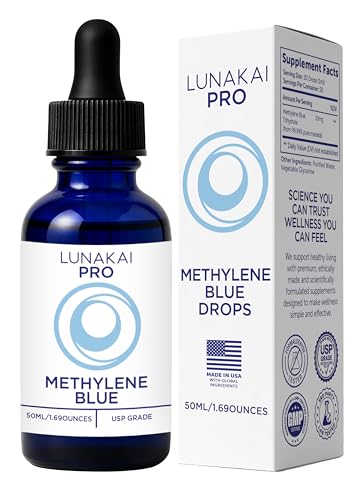
Given the critical importance of purity and concentration, sourcing pharmaceutical-grade methylene blue is non-negotiable for anyone considering its use. Industrial or laboratory-grade methylene blue often contains impurities, including heavy metals or other dyes, which can be harmful when ingested.
When searching for methylene blue products, prioritize suppliers who can provide Certificates of Analysis (CoA) for each batch. These documents confirm the purity, identity, and absence of contaminants. Look for products explicitly labeled “USP Grade” or “Pharmaceutical Grade.”
What to Look For (Amazon Search Terms)
When searching online, use specific terms to narrow your results:
1. pharmaceutical grade methylene blue
2. USP grade methylene blue solution
3. methylene blue for research pure
Always verify the supplier’s reputation and review available documentation before purchasing. The integrity of the product directly impacts both safety and efficacy.

Conclusion: An Evidence-Honest Perspective
Methylene blue presents a fascinating and promising compound for mitochondrial optimization, cognitive enhancement, and potentially longevity. Its mechanisms of action as an electron carrier and antioxidant offer a unique approach to cellular health, distinct from many other nootropics and supplements.
However, its pharmaceutical nature demands a rigorous, evidence-honest approach. The research, while compelling in preclinical models and preliminary human studies, is still evolving. Serious safety considerations, particularly drug interactions and contraindications like G6PD deficiency, necessitate extreme caution and professional medical guidance.
For those considering methylene blue, the path forward involves meticulous research, a commitment to pharmaceutical-grade sourcing, and, most importantly, close collaboration with a knowledgeable healthcare provider to assess individual risk and benefit. Methylene blue is a powerful tool, deserving of respect and judicious application.
These statements have not been evaluated by the FDA. This product is not intended to diagnose, treat, cure, or prevent any disease.

Frequently Asked Questions (FAQ)
What is the recommended dosage for methylene blue for cognitive enhancement?
Research on optimal dosing for cognitive enhancement in humans is still limited. Studies often use very low oral doses, such as 0.5-2 mg/kg, which is significantly lower than doses for methemoglobinemia. It is crucial to consult a healthcare professional for personalized guidance, as higher doses can be toxic.
Can methylene blue be taken with antidepressants?
Methylene blue is a potent MAOI, especially at higher doses. Combining it with serotonergic antidepressants (e.g., SSRIs, SNRIs) can lead to serotonin syndrome, a potentially life-threatening condition. It is strongly contraindicated without strict medical supervision and careful dose titration, if at all. Always consult your prescribing physician.
How long does it take to see effects from methylene blue?
Some cognitive effects, such as enhanced memory retrieval, have been observed acutely in human studies within hours of a single dose. For broader mitochondrial optimization or neuroprotective benefits, effects may be more subtle and require consistent, low-dose administration over time. Individual responses can vary.
What is G6PD deficiency, and why is it important for methylene blue users?
Glucose-6-Phosphate Dehydrogenase (G6PD) deficiency is a genetic condition where the body lacks an enzyme crucial for protecting red blood cells from oxidative damage. Methylene blue can induce severe hemolytic anemia in individuals with G6PD deficiency, making screening for this condition absolutely essential before any use of MB.
Is methylene blue safe for long-term use?
Long-term safety data for methylene blue, particularly at low, off-label doses for cognitive enhancement or longevity, is not well-established in humans. While preclinical studies suggest benefits, the potential for cumulative effects or unforeseen risks over extended periods remains a subject of ongoing research. Medical supervision is advised.
Why is “pharmaceutical grade” methylene blue important?
Pharmaceutical grade methylene blue ensures the product meets strict purity standards, minimizing contaminants like heavy metals or other dyes that can be present in industrial or laboratory grades. These impurities can be harmful when ingested, making pharmaceutical purity critical for safety and predictable effects in human use.
References
- Methylene blue: a controversial diagnostic acid and medication? Toxicology Research (2022). PMID 36337249
- The Potentials of Methylene Blue as an Anti-Aging Drug. Cells (2021). PMID 34943887
- From Mitochondrial Function to Neuroprotection – an Emerging Role for Methylene Blue. Molecular Neurobiology (2018). PMID 28840449
These statements have not been evaluated by the Food and Drug Administration. This information is not intended to diagnose, treat, cure, or prevent any disease. Content is for informational purposes only and is not medical advice; consult a qualified healthcare provider before starting any supplement. As an Amazon Associate we earn from qualifying purchases.