Methylene blue has attracted growing interest as a nootropic and mitochondrial support compound, but it carries a hard biochemical limit that wellness-focused discussions frequently overlook: individuals with glucose-6-phosphate dehydrogenase (G6PD) deficiency cannot safely use it. This is not a theoretical caution or a rare edge case — G6PD deficiency is the most common inherited enzyme disorder in humans, affecting an estimated 400 million people worldwide, and administering methylene blue to someone with this condition can trigger acute hemolytic anemia and, paradoxically, worsen the methemoglobinemia the drug is often used to treat.
Understanding why requires a short detour into red blood cell biochemistry. Methylene blue depends on NADPH — a reducing agent produced almost exclusively by G6PD inside red blood cells — to perform its intended pharmacological function. Without sufficient NADPH, methylene blue cannot complete its reductive cycle and instead behaves as an oxidizing agent that destroys the very cells it passes through. This article explains that mechanism in plain terms, reviews the clinical evidence for the danger, and outlines why G6PD screening should be considered a prerequisite before any use of methylene blue, clinical or otherwise.
Key Takeaways
- G6PD deficiency is an absolute contraindication to methylene blue: the drug’s reductive mechanism depends entirely on NADPH that G6PD-deficient red blood cells cannot supply [1].
- In G6PD-deficient patients, methylene blue acts as an oxidant rather than a reductant, simultaneously causing hemolytic anemia and failing to treat the methemoglobinemia it was administered for [2].
- G6PD deficiency affects an estimated 400 million people globally and is most prevalent in individuals of African, Mediterranean, Middle Eastern, and South or Southeast Asian ancestry — screening cannot be skipped based on perceived low personal risk.
- Methylene blue can paradoxically induce methemoglobinemia at doses above approximately 4 mg/kg in any patient; in G6PD-deficient individuals, even lower therapeutic doses carry serious oxidative risk [3].
- Leucomethylene blue is under active investigation as a potential G6PD-safe alternative, but it remains unapproved and unvalidated for clinical use [4].
What Is G6PD Deficiency?
Glucose-6-phosphate dehydrogenase (G6PD) is an enzyme that catalyzes the first and rate-limiting step of the pentose phosphate pathway, converting NADP+ to NADPH. In red blood cells, which contain no mitochondria and therefore have no alternative route for generating NADPH, this pathway is the sole source of the reducing power needed to neutralize oxidative stress [1]. G6PD deficiency is an X-linked recessive condition caused by any of hundreds of known mutations in the G6PD gene, producing enzyme variants with reduced activity, reduced stability, or both.
The clinical significance of G6PD deficiency is trigger-dependent. Many carriers live without symptoms until their red blood cells encounter an oxidative stressor — certain drugs, acute infections, or foods such as fava beans. At that point, without adequate NADPH to maintain glutathione in its reduced form and protect membrane proteins, red blood cells sustain rapid oxidative damage. The result is hemolysis: destruction of red blood cells faster than the body can replace them, producing anemia, jaundice, and in severe cases, acute kidney injury [5].
How Methylene Blue Works in Normal Red Blood Cells
Methylene blue is FDA-approved to treat acquired methemoglobinemia — a condition in which iron in hemoglobin is oxidized from the ferrous (Fe²⁺) to the ferric (Fe³⁺) state, leaving hemoglobin unable to carry oxygen. The treatment cycle proceeds as follows: methylene blue accepts electrons from NADPH via the enzyme NADPH-methemoglobin reductase and is converted to its reduced form, leucomethylene blue. Leucomethylene blue then donates those electrons to ferric hemoglobin (methemoglobin), restoring it to functional ferrous hemoglobin. In the process, leucomethylene blue is reoxidized back to methylene blue, and the cycle repeats [3].
The pharmacogenomics of this pathway are well-characterized. The PharmGKB summary of the methylene blue metabolic pathway describes the central role of NADPH and the enzymatic steps that drive the reductive cycle inside erythrocytes [6]. When NADPH is abundantly available — as it is in red blood cells with normal G6PD activity — this cycle is efficient and safe at standard therapeutic doses of 1–2 mg/kg. The entire mechanism collapses, however, when G6PD is deficient and cannot supply adequate NADPH.

Why G6PD Deficiency Breaks the Methylene Blue Cycle
In a G6PD-deficient red blood cell, NADPH production is severely impaired. When methylene blue enters such a cell, it cannot be adequately reduced to leucomethylene blue. Instead of completing a therapeutic reductive cycle, methylene blue remains in its oxidized state — and in that state, it behaves as a direct oxidant. It generates reactive oxygen species, depletes reduced glutathione, and attacks the membrane lipids and proteins that maintain red blood cell integrity [5].
The practical consequence is twofold and compounding. First, the drug causes hemolysis: G6PD-deficient red blood cells, already structurally compromised by chronic oxidative vulnerability, are lysed by the very compound intended to support oxygen delivery [5]. Second, methylene blue fails to treat the methemoglobinemia it was administered for, because the reductive cycle depends on NADPH that is not available. The patient ends up facing both a new problem (hemolytic anemia) and the unresolved original problem (methemoglobinemia) simultaneously.
A published pediatric case makes this concrete. A 7-year-old female with undiagnosed G6PD deficiency developed methemoglobinemia after an oxidative drug exposure; methylene blue was administered as the standard antidote, after which she developed acute hemolytic anemia directly attributable to her unrecognized enzyme deficiency [2]. This case illustrates that G6PD status cannot be assumed to be normal even in young, previously healthy patients — and that the clinical stakes of missing the diagnosis are high.
The Paradox: Methylene Blue Can Cause What It Is Meant to Treat
At doses above approximately 4 mg/kg, methylene blue can paradoxically induce methemoglobinemia in any patient regardless of G6PD status. At high concentrations, the reductive cycle becomes saturated and methylene blue begins to oxidize hemoglobin directly rather than reduce it [3]. In G6PD-deficient patients, this paradox is compounded: because the reductive pathway is already compromised by NADPH insufficiency, the therapeutic window is effectively eliminated. Even doses well below 4 mg/kg may shift the balance toward net oxidation, triggering both hemolysis and methemoglobinemia at once.
This dose-response paradox has real implications for anyone exploring methylene blue outside supervised clinical settings. The same compound that reliably reduces methemoglobin at 1–2 mg/kg in healthy individuals becomes a dose-dependent hazard in those same individuals at higher concentrations, and is contraindicated at any dose in G6PD-deficient individuals. The margin for error is narrow, and the consequences of misjudging G6PD status are serious.
Screening for G6PD Deficiency: Who Is at Risk and How to Test
G6PD deficiency is most prevalent in populations from sub-Saharan Africa, the Mediterranean basin, the Middle East, South Asia, and Southeast Asia — regions historically endemic for malaria, where certain G6PD variants appear to confer partial protection against Plasmodium infection. The condition is X-linked: hemizygous males carrying one affected X chromosome express full enzyme deficiency, while heterozygous females may have intermediate enzyme activity and correspondingly variable oxidative susceptibility [1].
Standard screening uses a quantitative G6PD enzyme activity assay performed on a blood sample. Qualitative fluorescent spot tests are widely used in point-of-care settings but may fail to identify heterozygous females with intermediate activity. For clinical administration of methylene blue, G6PD status should be confirmed before treatment. For individuals self-experimenting with methylene blue as a nootropic or longevity supplement, the same standard applies. Ancestry alone is not a reliable proxy — G6PD deficiency exists across many populations, and the absence of a known family history does not rule out the condition.
Leucomethylene Blue: Early Research Into a Safer Alternative
Investigators are exploring whether leucomethylene blue — the pre-reduced form of methylene blue — could treat methemoglobinemia in G6PD-deficient patients without triggering hemolysis. Because leucomethylene blue is already in its reduced state when administered, it does not require NADPH to donate electrons to methemoglobin; the oxidative demand that causes hemolysis in G6PD-deficient red blood cells is theoretically bypassed [4].
This approach is currently investigational. A 2025 review in Current Medicinal Chemistry describes leucomethylene blue as a promising candidate but acknowledges that clinical evidence in G6PD-deficient human populations remains limited and that pharmacokinetics, stability, and safety in this population require further study before clinical adoption [4]. Leucomethylene blue is not approved or commercially available as a therapeutic alternative. For the present, G6PD deficiency remains a firm contraindication to methylene blue use, with no validated substitute for the affected population.
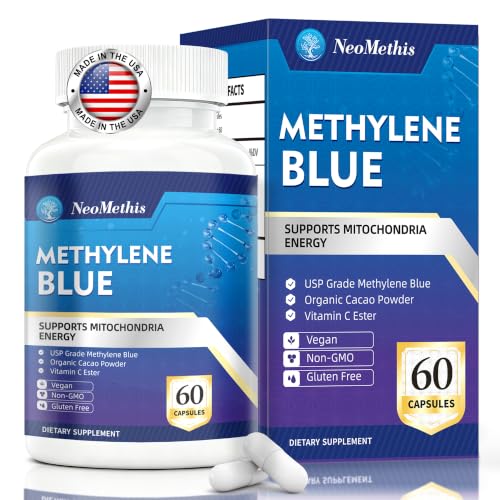
🛒 Where to Buy Methylene Blue
- Troscriptions Blue CannatineLab-tested / studied
sublingual troches, 4 mg methylene blue + 4 mg nicotine + 50 mg caffeine + 200 mg alpha-GPC per troche — Flagship stacked nootropic troche from Troscriptions (founded by physician Ted Achacoso MD); pharmaceutical-grade MB combined with cholinergic and stimulant cofactors; widely regarded as the benchmark MB product in the nootropic community. Confirm drug interaction checklist before use. - Double Wood Supplements Methylene Blue
capsules, 5 mg per capsule — Accessible entry-point brand widely available on Amazon; transparent third-party testing; one of the few capsule-form MB products from an established U.S. supplement company; good for low-dose protocols. - Health Natura Methylene Blue USP Solution
liquid, 0.5% solution, approximately 2.5 mg per 5 drops — Long-standing liquid MB brand; clear USP-grade labeling; 0.5% concentration referenced in historical clinical protocols; glass dropper bottle; available on Amazon. - BulkSupplements Methylene Blue Powder
powder, Variable — sold as raw tested powder; requires accurate milligram scale — Lowest cost-per-dose option for experienced users; lab-tested with published COA; not recommended for anyone new to the compound given the critical importance of accurate low-dose measurement.
As an Amazon Associate we earn from qualifying purchases. Methylene blue grade matters more than price or color: only USP, BP, or EP pharmaceutical grade is appropriate for human use, and aquarium, histology or industrial dye grades are not substitutes. Ask for a lot-specific third-party certificate of analysis with numerical results covering azure B and heavy metals, since a bare percent-purity figure says nothing about the remaining fraction.


A Note on the Evidence
This article is informational only and does not constitute medical advice. G6PD enzyme activity testing must be performed by a qualified healthcare provider; self-assessment based on ancestry or symptom history is not reliable. Any individual with known or suspected G6PD deficiency, anyone taking serotonergic medications (SSRIs, SNRIs, MAOIs, tramadol), or anyone with relevant medical conditions should not use methylene blue without explicit guidance from a physician who has reviewed their complete medication list and genetic history.
Frequently Asked Questions
Why does methylene blue specifically cause hemolysis in people with G6PD deficiency?
Methylene blue must be reduced to leucomethylene blue by NADPH to complete its therapeutic cycle. In red blood cells, NADPH is generated almost entirely by G6PD [1]. When G6PD is deficient, NADPH is unavailable; methylene blue remains in its oxidized state and directly damages red blood cell membranes, depletes protective glutathione, and triggers cell lysis [5]. The problem is not simply that the drug fails — it actively harms the cells it should be passing through harmlessly.
Can a G6PD-deficient patient with methemoglobinemia receive any treatment?
In current clinical practice, methylene blue is avoided in confirmed or suspected G6PD deficiency. Alternative approaches include high-flow supplemental oxygen, exchange transfusion in severe cases, and supportive care. A pediatric case report documents a patient who developed hemolytic anemia after receiving methylene blue for methemoglobinemia because her G6PD deficiency was undiagnosed at the time [2]. Leucomethylene blue is being studied as a future option but is not yet approved for this indication [4].
How common is G6PD deficiency, and how would someone know if they have it?
G6PD deficiency is the most prevalent inherited enzyme disorder globally, with roughly 400 million affected individuals. It is most common in people of sub-Saharan African, Mediterranean, Middle Eastern, and South or Southeast Asian descent. Because it is X-linked, males are more severely affected, while carrier females may have intermediate enzyme activity [1]. Testing requires a blood-based enzyme activity assay ordered by a healthcare provider; there is no reliable way to self-assess.
What symptoms would indicate methylene blue-induced hemolysis?
Symptoms typically appear within hours of exposure and include pallor, rapidly worsening fatigue, jaundice (yellowing of the skin or eyes), dark or reddish-brown urine from hemoglobin released by lysed red blood cells, and elevated heart rate. In the documented pediatric case, the patient presented with both hemolytic anemia and persistent methemoglobinemia occurring simultaneously — two concurrent crises rather than one resolved [2]. Any of these signs after methylene blue use should prompt immediate medical evaluation.
Does taking a lower dose of methylene blue make it safe for G6PD-deficient individuals?
No established safe dose exists for G6PD-deficient individuals. The hemolytic risk reflects the absence of the enzyme required for safe metabolism, not simply the quantity of drug administered. Furthermore, at doses above roughly 4 mg/kg, methylene blue can paradoxically cause methemoglobinemia in any patient — including those without G6PD deficiency — because the reductive pathway becomes overwhelmed [3]. Dose reduction does not eliminate the underlying enzymatic problem in G6PD deficiency.
Does the grade of methylene blue purchased affect safety for G6PD-deficient people?
Grade matters for everyone, but it does not resolve the G6PD contraindication. Only USP-grade (pharmaceutical-purity) methylene blue is appropriate for human use; industrial and histological grades contain heavy metal contaminants and other impurities that carry their own toxicities. However, even pharmaceutical-grade methylene blue remains absolutely contraindicated in G6PD deficiency. Purity is a necessary condition for safe use in general — it is not a workaround for a genetic contraindication.

References
- Kirkman HN et al. Regulation of glucose-6-phosphate dehydrogenase in human erythrocytes. The Journal of biological chemistry (1986). PMID 3081513
- Fastuca A et al. Glucose-6-phosphate dehydrogenase deficiency induced hemolytic anemia and methemoglobinemia: a case report in a 7 -year-old female patient. Italian journal of pediatrics (2025). PMID 40841696
- Bradberry SM et al. Occupational methaemoglobinaemia. Mechanisms of production, features, diagnosis and management including the use of methylene blue. Toxicological reviews (2003). PMID 14579544
- Emadi E et al. The Potential of Leucomethylene Blue in Methemoglobinemia Treatment: A New Hope for Patients with G6PD?. Current medicinal chemistry (2025). PMID 37694789
- Jansson SE et al. Membrane characteristics and metabolic properties of glucose-6-phosphate dehydrogenase deficient red cells. British journal of haematology (1980). PMID 6252945
- McDonagh EM et al. PharmGKB summary: methylene blue pathway. Pharmacogenetics and genomics (2013). PMID 23913015
These statements have not been evaluated by the Food and Drug Administration. This information is not intended to diagnose, treat, cure, or prevent any disease. Content is for informational purposes only and is not medical advice; consult a qualified healthcare provider before starting any supplement. As an Amazon Associate we earn from qualifying purchases.