Methylene blue (methylthioninium chloride) is one of the oldest synthetic drugs in existence, approved by the FDA for treating methemoglobinemia, yet it has attracted renewed scientific interest as a candidate compound for slowing cellular aging. Researchers have proposed several mechanisms by which low-dose methylene blue might support longevity at the cellular level: acting as an alternative electron carrier in the mitochondrial electron transport chain, upregulating cytochrome c oxidase activity, scavenging reactive oxygen species at low doses, and inhibiting the aggregation of tau protein implicated in neurodegeneration.
Interest has grown considerably as the biology of cellular senescence — the process by which aging cells stop dividing but resist programmed death — has moved to the center of longevity research. Methylene blue sits at an intriguing intersection of mitochondrial pharmacology and oxidative biology, but the honest caveat is that most supporting evidence comes from cell culture and animal models. Human clinical data on longevity endpoints is essentially absent. This article walks through what is proposed, what has been observed in laboratory settings, and the significant safety constraints that govern any responsible discussion of methylene blue.
Key Takeaways
- Methylene blue’s proposed anti-aging effects center on mitochondrial electron shuttling, cytochrome c oxidase upregulation, and low-dose ROS scavenging — mechanisms supported by preclinical evidence but not yet validated in human longevity trials.
- In vitro research on antioxidant compounds and fibroblast replicative lifespan demonstrates that oxidative stress is a genuine driver of cellular senescence [1], providing biological context for methylene blue’s antioxidant pharmacology.
- The dose-response is an inverted U-curve: low doses are antioxidant, while doses above approximately 4 mg/kg can become pro-oxidant and cause the very methemoglobinemia methylene blue is approved to treat.
- Serotonin syndrome risk with SSRIs, SNRIs, and other serotonergic drugs is serious and potentially fatal — this is an FDA-documented safety concern requiring medical supervision, not a minor interaction.
- G6PD deficiency is an absolute contraindication, and only pharmaceutical-grade (USP) product is appropriate for human use; industrial or histology-grade material contains toxic impurities.
Methylene Blue as a Mitochondrial Electron Shuttle
The most frequently cited mechanistic rationale for methylene blue’s potential anti-aging effects centers on its behavior inside mitochondria. The mitochondrial electron transport chain (ETC) — Complex I through Complex IV — generates the electrochemical gradient that drives ATP synthesis. When ETC function declines with age, electron leakage increases, reactive oxygen species accumulate, and cellular energy output falls. These are not theoretical aging mechanisms; they are well-documented hallmarks of the aging cell.
Methylene blue is a redox-active molecule capable of accepting electrons from NADH (the substrate of Complex I) and donating them directly to cytochrome c, effectively bypassing Complexes I, II, and III. This electron shuttle function has been proposed as a way to maintain mitochondrial membrane potential and ATP production even when upstream ETC components are dysfunctional or inhibited. Preclinical observations also suggest that methylene blue at low concentrations — in the nanomolar to low micromolar range — may upregulate cytochrome c oxidase (Complex IV) expression, potentially increasing the efficiency of the terminal step of oxygen reduction to water.
These mechanisms remain active areas of investigation, predominantly studied in isolated mitochondria or cell lines. Extrapolating this pharmacology to human aging biology requires substantial caution, and the dose ranges used in cell culture do not map straightforwardly onto oral human dosing.
Reactive Oxygen Species Scavenging and the Dose Paradox
One of the more counterintuitive aspects of methylene blue pharmacology is its dose-dependent relationship with oxidative stress. At low doses — generally considered to be below approximately 4 mg/kg or in the lower micromolar concentration range in cell culture — methylene blue exhibits antioxidant properties, intercepting reactive oxygen species before they damage lipids, proteins, and DNA. This is the pharmacological range of interest for longevity-oriented research.
At high doses, the same compound becomes pro-oxidant and, critically, can cause the methemoglobinemia it is FDA-approved to treat at low doses. This paradox is well-documented and has direct implications for anyone considering methylene blue: there is no ‘more is better’ principle here. The dose-response relationship is an inverted U-curve, meaning exceeding the therapeutic window does not provide additional benefit — it causes measurable harm.

This low-dose antioxidant activity is relevant to research on cellular longevity. Work examining how antioxidant compounds affect the replicative lifespan of human fibroblasts in cell culture has provided in vitro evidence that oxidative stress is a meaningful driver of replicative senescence, and that antioxidant interventions can modulate this process [1]. Methylene blue’s low-dose antioxidant profile places it in this category of compounds, though its redox pharmacology is more complex than classical antioxidants such as vitamin C or vitamin E.
Cellular Senescence: The Biological Link to Aging
Cellular senescence — the state in which a cell permanently exits the cell cycle but resists apoptosis — is now recognized as a central driver of organismal aging. Senescent cells accumulate with age and secrete a pro-inflammatory cocktail of cytokines, growth factors, and proteases known as the senescence-associated secretory phenotype (SASP). This SASP can damage neighboring healthy tissue, promote chronic low-grade inflammation, and contribute to the functional decline seen across aging organs.
Mitochondrial dysfunction and elevated reactive oxygen species are among the established triggers and amplifiers of the senescent phenotype. Because methylene blue is proposed to address both upstream factors — by supporting ETC function and scavenging ROS — it has been hypothesized that it might reduce the rate of stress-induced senescence in certain cell populations. Research in human diploid fibroblasts has examined the relationship between antioxidant capacity and replicative lifespan, finding that oxidative mechanisms play a measurable role in limiting how many times primary cells can divide before entering senescence [1].
It is important to emphasize that demonstrating a compound reduces cellular senescence markers in a dish is a very long distance from demonstrating it extends human healthspan. The senescence field is active and genuinely promising, but translation to clinical outcomes has proven difficult even for compounds with robust preclinical data.
Tau Aggregation and Neuroprotection in the Context of Brain Aging
A separate longevity angle involves methylene blue’s proposed effects on tau protein — the microtubule-associated protein whose misfolding and aggregation are hallmarks of Alzheimer’s disease and other tauopathies. Some of the earliest research on methylene blue as a potential therapeutic was conducted in the context of neurodegeneration rather than general aging biology.
In laboratory studies, methylene blue has been shown to inhibit the aggregation of tau into the paired helical filaments that characterize neurofibrillary tangles. The proposed mechanism involves methylene blue directly interfering with the hydrophobic interactions that drive tau self-assembly. From a longevity perspective, the brain is arguably the organ most sensitive to accumulated damage over decades, and tau pathology is closely associated with cognitive decline in aging populations.
Clinical trials have explored methylene blue derivatives in Alzheimer’s patients, but results have been mixed and the field remains unsettled. As with mitochondrial mechanisms, the in vitro and animal data are more encouraging than the human trial data, and no regulatory agency has approved methylene blue or any direct derivative for a neurodegenerative indication.
Preclinical Lifespan Data: Organisms, Limitations, and What They Mean
Several preclinical studies in invertebrate and mammalian models have examined whether methylene blue supplementation affects lifespan or aging-related endpoints. In Caenorhabditis elegans — a nematode widely used in aging research because of its short lifespan and well-characterized genetics — low-dose methylene blue has been reported to extend lifespan in some experimental settings, with proposed links to mitochondrial and oxidative stress mechanisms. Rodent research has more often explored cognitive aging endpoints rather than raw survival.
The honest summary is that this preclinical evidence is early-stage, heterogeneous in experimental design, and not yet sufficient to make strong claims about human longevity. Positive findings in short-lived model organisms have a poor historical track record of translating to mammals and a worse one of translating to humans. No controlled human trial has measured lifespan or robust healthspan endpoints for methylene blue, and the current evidence does not support longevity claims for human use.
Safety Profile: Contraindications Every Reader Must Understand
Methylene blue carries a serious FDA drug-interaction warning for serotonin syndrome. As a potent monoamine oxidase inhibitor, it can dangerously elevate serotonin levels when co-administered with SSRIs, SNRIs, other MAOIs, tramadol, meperidine, or linezolid. This is not a theoretical risk — there are documented cases of severe and fatal serotonin syndrome in surgical patients who received intravenous methylene blue while taking antidepressants. Anyone on serotonergic medications should not use methylene blue without explicit medical supervision and a careful drug-interaction review.
Individuals with glucose-6-phosphate dehydrogenase (G6PD) deficiency are absolutely contraindicated. G6PD is a red blood cell enzyme required for the reduction of methemoglobin — the same biochemical pathway methylene blue acts through therapeutically. In G6PD-deficient individuals, methylene blue cannot complete this reduction and instead accumulates, triggering severe hemolytic anemia. G6PD deficiency is relatively common in people of African, Mediterranean, and Southeast Asian ancestry, and anyone uncertain of their status should be tested before any consideration of methylene blue. Finally, only USP-grade pharmaceutical-purity product is appropriate for human use; industrial-grade and histology-grade methylene blue contain heavy metal contaminants and other toxic impurities not acceptable for human consumption.
🛒 Where to Buy Methylene Blue
- Troscriptions Blue CannatineLab-tested / studied
sublingual troches, 4 mg methylene blue + 4 mg nicotine + 50 mg caffeine + 200 mg alpha-GPC per troche — Flagship stacked nootropic troche from Troscriptions (founded by physician Ted Achacoso MD); pharmaceutical-grade MB combined with cholinergic and stimulant cofactors; widely regarded as the benchmark MB product in the nootropic community. Confirm drug interaction checklist before use. - Double Wood Supplements Methylene Blue
capsules, 5 mg per capsule — Accessible entry-point brand widely available on Amazon; transparent third-party testing; one of the few capsule-form MB products from an established U.S. supplement company; good for low-dose protocols. - Health Natura Methylene Blue USP Solution
liquid, 0.5% solution, approximately 2.5 mg per 5 drops — Long-standing liquid MB brand; clear USP-grade labeling; 0.5% concentration referenced in historical clinical protocols; glass dropper bottle; available on Amazon. - BulkSupplements Methylene Blue Powder
powder, Variable — sold as raw tested powder; requires accurate milligram scale — Lowest cost-per-dose option for experienced users; lab-tested with published COA; not recommended for anyone new to the compound given the critical importance of accurate low-dose measurement.
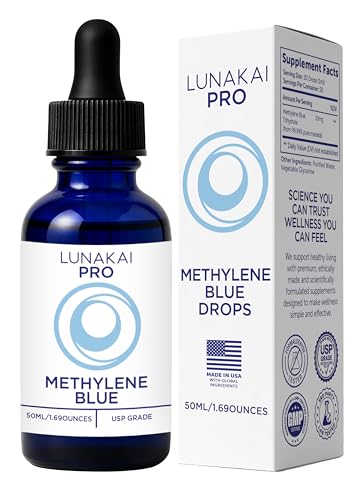
As an Amazon Associate we earn from qualifying purchases. Methylene blue grade matters more than price or color: only USP, BP, or EP pharmaceutical grade is appropriate for human use, and aquarium, histology or industrial dye grades are not substitutes. Ask for a lot-specific third-party certificate of analysis with numerical results covering azure B and heavy metals, since a bare percent-purity figure says nothing about the remaining fraction.


A Note on the Evidence
The evidence for methylene blue’s anti-aging effects in humans is preliminary and largely extrapolated from cell culture and animal models; no human clinical trial has demonstrated longevity or healthspan benefits, and this article is informational only, not medical advice. Methylene blue is a potent MAO inhibitor with serious and potentially fatal drug interaction risks, is absolutely contraindicated in G6PD deficiency, and requires pharmaceutical-grade sourcing — consult a qualified physician before considering any use.
Frequently Asked Questions
What is the proposed mechanism by which methylene blue might slow aging?
Methylene blue is hypothesized to support mitochondrial function by acting as an alternative electron carrier — accepting electrons from NADH and donating them to cytochrome c, bypassing damaged upstream complexes in the ETC. It may also upregulate cytochrome c oxidase (Complex IV) and scavenge reactive oxygen species at low doses, reducing the oxidative damage to DNA, proteins, and lipids that accumulates with age. These are proposed mechanisms derived from preclinical research, not established human clinical findings.
Does methylene blue extend lifespan in any studied organism?
Positive effects on lifespan have been reported in C. elegans and some other short-lived model organisms in preclinical settings, but results across studies are heterogeneous. No human clinical trial has demonstrated longevity or healthspan benefits, and the evidence base for human life extension is currently absent. Claims of life extension in humans are not supported by clinical data.
How does methylene blue relate to cellular senescence?
Cellular senescence — when aging cells stop dividing but resist death — is driven in part by mitochondrial dysfunction and elevated oxidative stress. Because methylene blue is proposed to address both of these upstream factors, it has been investigated as a potential modulator of senescent cell accumulation. Research on antioxidants and fibroblast replicative lifespan provides in vitro evidence that oxidative mechanisms genuinely limit how many times primary human cells can divide [1], placing methylene blue’s antioxidant pharmacology in a relevant biological framework, though human senescence data remain lacking.
Can I take methylene blue if I am on an antidepressant?
No — not without explicit medical supervision. Methylene blue is a potent monoamine oxidase inhibitor and carries an FDA safety warning for serotonin syndrome when combined with SSRIs, SNRIs, tramadol, meperidine, linezolid, and other serotonergic drugs. Serotonin syndrome can be fatal. This drug combination should be avoided unless managed by a physician who is fully informed about both agents and can monitor closely.
What is G6PD deficiency and why does it matter for methylene blue safety?
Glucose-6-phosphate dehydrogenase (G6PD) is a red blood cell enzyme required for the reduction of methemoglobin — the same biochemical pathway that makes methylene blue therapeutically effective. In G6PD-deficient individuals, methylene blue cannot work through this pathway and instead triggers severe hemolytic anemia as red blood cells are destroyed. G6PD deficiency is common in people of African, Mediterranean, and Southeast Asian ancestry and is an absolute contraindication to methylene blue use.
What grade of methylene blue is safe for human use, and does it matter?
Only USP-grade (United States Pharmacopeia pharmaceutical grade) methylene blue is appropriate for human use. Industrial, chemical-reagent, and histology-grade products are manufactured to entirely different purity standards and may contain heavy metals and toxic impurities at levels unacceptable for human consumption. The grade designation is not cosmetic — it reflects whether the product has been tested and produced under pharmaceutical safety standards, and sourcing the wrong grade carries real toxicological risk.
References
- Sadowska-Bartosz I et al. Effect of Antioxidants on the Fibroblast Replicative Lifespan In Vitro. Oxidative medicine and cellular longevity (2020). PMID 33029282
These statements have not been evaluated by the Food and Drug Administration. This information is not intended to diagnose, treat, cure, or prevent any disease. Content is for informational purposes only and is not medical advice; consult a qualified healthcare provider before starting any supplement. As an Amazon Associate we earn from qualifying purchases.