Methylene Blue (MB) has attracted growing interest as a possible mood-support compound, and the biochemical rationale is not trivial. As a potent inhibitor of monoamine oxidase (MAO) enzymes, MB slows the breakdown of serotonin, dopamine, and noradrenaline — the same neurotransmitter systems targeted by modern antidepressants. This places it in mechanistic territory that researchers have been investigating since the mid-twentieth century.
The clinical evidence is still early and largely limited to bipolar disorder rather than unipolar depression or generalized anxiety, but several controlled trials have been published. At the same time, the very mechanism that may produce mood benefits also creates a serious drug-interaction risk: because MB is a MAO inhibitor, combining it with serotonergic drugs can trigger life-threatening serotonin syndrome. Understanding both sides of this picture is essential before considering MB for any mood-related purpose.
Key Takeaways
- Methylene Blue is a confirmed MAO inhibitor that raises levels of serotonin, dopamine, and noradrenaline — the same neurotransmitter systems targeted by antidepressant drugs [1].
- Two controlled trials in bipolar disorder found MB reduced manic-depressive episodes and improved residual depressive symptoms, though sample sizes were small [2][3].
- Antidepressant-like activity in animal models appears to involve mechanisms beyond MAO inhibition alone, possibly including mitochondrial or redox effects [4].
- Combining MB with SSRIs, SNRIs, or other serotonergic drugs carries a documented, serious risk of serotonin syndrome — this is an FDA drug-interaction warning, not a theoretical concern.
- G6PD deficiency is an absolute contraindication; only USP pharmaceutical-grade MB is appropriate for human use; doses above approximately 4 mg/kg can cause methemoglobinemia in anyone.
How Methylene Blue Inhibits MAO Enzymes
Monoamine oxidase (MAO) enzymes — primarily MAO-A and MAO-B — are responsible for breaking down neurotransmitters including serotonin, dopamine, and noradrenaline in the brain. Classic antidepressants known as MAOIs work by blocking these enzymes, allowing monoamine levels to rise. Research published in 2007 confirmed that methylene blue and several structurally related redox dyes significantly inhibit MAO activity, and documented corresponding changes in pineal indole levels including N-acetylserotonin and melatonin in animal tissue [1]. Earlier mechanistic work examining how redox-active compounds interact with amine oxidase enzymes laid part of the biochemical groundwork for understanding these inhibitory properties [5].
Because MB can cycle between its oxidized (blue) and reduced (leuco, colorless) forms, it participates in cellular redox chemistry in ways that influence multiple enzyme systems simultaneously — not solely MAO. This redox cycling is also why MB has proposed roles in mitochondrial electron transport, reactive oxygen species scavenging, and other cellular processes that may independently bear on mood and brain function.
Antidepressant-Like Activity: Is MAO Inhibition the Whole Story?
A 2018 study in ACS Chemical Neuroscience took an illuminating approach to isolating MB’s antidepressant mechanisms. Researchers synthesized methylene blue analogues that retained antidepressant-like activity in animal behavioral models but showed markedly reduced MAO inhibitory potency compared to MB itself [4]. This finding suggests that MB’s mood-relevant effects are not purely a function of MAO inhibition — other properties, possibly including mitochondrial electron shuttling or oxidative stress modulation, may contribute independently.
This distinction matters practically. If MAO inhibition were the sole driver of antidepressant-like effects, then any dose of MB that improved mood would carry proportional serotonin syndrome risk. The 2018 findings suggest the relationship may be more nuanced, though they do not eliminate that risk and should not be used to justify combining MB with serotonergic medications.

Clinical Evidence in Bipolar Disorder
The most rigorous human evidence for MB in mood disorders comes from trials in bipolar disorder. A two-year double-blind crossover trial published in 1986 followed participants and found that methylene blue had a prophylactic effect on manic-depressive episodes compared to a low-dose control condition [2]. This remains one of the earliest controlled human trials of MB for a psychiatric indication.
A more recent randomized crossover study published in The British Journal of Psychiatry examined MB specifically for residual symptoms of bipolar disorder — the persistent low-level mood, cognitive, and anxiety symptoms that often remain even after acute illness is controlled. The trial reported improvements in residual depressive symptoms [3]. Sample sizes in both trials were limited, and neither establishes MB as a standard treatment, but they represent genuine controlled data in a condition where few adjunctive options exist.
Neuroimaging Evidence: Oxidative Metabolism and Mood
A 2024 study using quantitative neuroimaging examined how brain oxidative neurometabolic responses to methylene blue differ between individuals with bipolar disorder and healthy controls. The researchers found altered responses in bipolar disorder, suggesting that MB’s effects on mitochondrial and oxidative metabolism in the brain are measurable and vary according to underlying neurobiological state [6].
This finding aligns with the broader hypothesis that MB’s mood-relevant properties may involve mitochondrial support — specifically its proposed role as an alternative electron carrier at Complexes I and IV of the mitochondrial respiratory chain — rather than MAO inhibition alone. It also raises the question of whether MB’s effects on mood will differ meaningfully between diagnostic populations, a question that current evidence cannot yet fully answer.
Catecholamines, Neuroprotection, and the Mood Connection
Beyond direct MAO inhibition, research on isolated arterial tissue has documented release of endogenous noradrenaline in the presence of pharmacologically relevant stimuli [7], situating catecholamine dynamics as part of the broader pharmacological picture for compounds that interact with sympathetic neurotransmission. Noradrenaline is a key target of several antidepressant classes, including SNRIs and tricyclics, and its dysregulation has been implicated in both depression and anxiety.
A separate line of evidence involves MB’s inhibition of the bioactivation of MPTP, a neurotoxin that destroys dopaminergic neurons in research models of Parkinson’s disease. A study examining antioxidants, redox agents, and MAO inhibitors found that MB was among the compounds capable of blocking MPTP bioactivation [8]. MPTP requires MAO-B to be converted to its toxic form, so MAO-B inhibition by MB may confer neuroprotective properties in dopamine-producing neurons — systems that are also central to motivation, reward, and aspects of depression that are difficult to treat.
Critical Safety Considerations: Serotonin Syndrome and Other Risks
The FDA has issued a serious drug-safety communication warning that methylene blue, when combined with serotonergic psychiatric medications — including SSRIs, SNRIs, tramadol, linezolid, and other serotonergic or MAO-inhibiting drugs — can precipitate serotonin syndrome, a potentially life-threatening condition characterized by agitation, hyperthermia, rapid heart rate, muscle rigidity, and in severe cases, seizures or death. This warning applies even at the low doses sometimes discussed in wellness contexts. Anyone currently taking an SSRI, SNRI, or any other serotonergic compound must treat MB as contraindicated without direct physician oversight.
Additional safety constraints are significant. G6PD deficiency, a common genetic enzyme disorder, is an absolute contraindication: the enzyme deficiency prevents MB from completing its normal redox cycle, causing it to trigger the very methemoglobinemia it is FDA-approved to treat at therapeutic doses in people without this condition. High doses of MB — roughly above 4 mg/kg — can cause methemoglobinemia even in individuals without G6PD deficiency, representing a paradoxical dose-dependent toxicity. Finally, only USP-grade (pharmaceutical-grade) methylene blue is appropriate for any human use; industrial and histology-grade products contain toxic impurities that make them categorically unsuitable.
🛒 Where to Buy Methylene Blue
- Troscriptions Blue CannatineLab-tested / studied
sublingual troches, 4 mg methylene blue + 4 mg nicotine + 50 mg caffeine + 200 mg alpha-GPC per troche — Flagship stacked nootropic troche from Troscriptions (founded by physician Ted Achacoso MD); pharmaceutical-grade MB combined with cholinergic and stimulant cofactors; widely regarded as the benchmark MB product in the nootropic community. Confirm drug interaction checklist before use. - Double Wood Supplements Methylene Blue
capsules, 5 mg per capsule — Accessible entry-point brand widely available on Amazon; transparent third-party testing; one of the few capsule-form MB products from an established U.S. supplement company; good for low-dose protocols. - Health Natura Methylene Blue USP Solution
liquid, 0.5% solution, approximately 2.5 mg per 5 drops — Long-standing liquid MB brand; clear USP-grade labeling; 0.5% concentration referenced in historical clinical protocols; glass dropper bottle; available on Amazon. - BulkSupplements Methylene Blue Powder
powder, Variable — sold as raw tested powder; requires accurate milligram scale — Lowest cost-per-dose option for experienced users; lab-tested with published COA; not recommended for anyone new to the compound given the critical importance of accurate low-dose measurement.
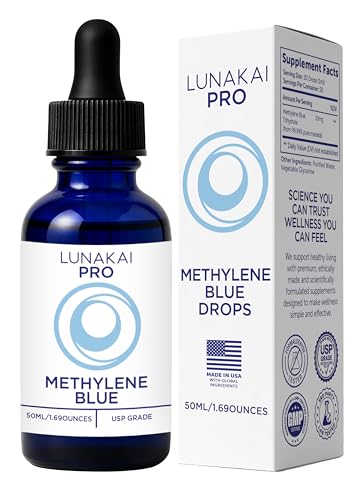
As an Amazon Associate we earn from qualifying purchases. Methylene blue grade matters more than price or color: only USP, BP, or EP pharmaceutical grade is appropriate for human use, and aquarium, histology or industrial dye grades are not substitutes. Ask for a lot-specific third-party certificate of analysis with numerical results covering azure B and heavy metals, since a bare percent-purity figure says nothing about the remaining fraction.


A Note on the Evidence
The controlled clinical trials for methylene blue in mood disorders are small, restricted largely to bipolar disorder, and do not constitute a basis for self-treating depression or anxiety. Methylene Blue is a pharmaceutical compound — not a dietary supplement — with serious FDA-documented drug interactions and absolute contraindications; consult a qualified physician before any use, especially if you take any psychiatric, serotonergic, or MAO-inhibiting medication.
Frequently Asked Questions
Does methylene blue actually inhibit MAO enzymes?
Yes. Controlled research has confirmed that methylene blue and structurally related redox dyes inhibit MAO activity and alter levels of monoamine metabolites including serotonin-related indoles in animal tissue [1]. Earlier mechanistic work also examined how redox-active compounds interact with amine oxidase enzymes at a biochemical level [5].
Has methylene blue been tested in humans with depression or bipolar disorder?
Yes, in controlled trials specifically for bipolar disorder. A two-year double-blind crossover trial found prophylactic benefit in manic-depressive psychosis [2], and a randomized crossover study found improvements in residual depressive symptoms in bipolar disorder [3]. Controlled evidence in unipolar depression or generalized anxiety disorder is currently lacking.
Is the antidepressant effect purely from MAO inhibition?
Not necessarily. A 2018 study created MB analogues with significantly reduced MAO inhibition that still showed antidepressant-like activity in behavioral models, suggesting other properties — possibly mitochondrial or redox-related mechanisms — may also contribute to mood effects [4].
Can I take methylene blue if I'm already on an antidepressant?
No — not without explicit physician guidance and extremely careful evaluation. The FDA has specifically warned that MB combined with SSRIs, SNRIs, tramadol, linezolid, or other serotonergic drugs can trigger serotonin syndrome, a potentially fatal drug interaction. This is not a minor precaution. Speak with your prescriber before any use.
What did neuroimaging research find about methylene blue and the brain?
A 2024 quantitative neuroimaging study found that the brain’s oxidative neurometabolic response to methylene blue is measurably altered in people with bipolar disorder compared to healthy controls [6], suggesting MB engages brain energy metabolism differently depending on the underlying neurobiological state of the individual.
Who should absolutely not use methylene blue?
People with G6PD deficiency should never use MB — the enzyme deficiency prevents normal MB metabolism and can cause severe hemolytic anemia. Anyone on serotonergic medications (SSRIs, SNRIs, certain opioids, linezolid, other MAOIs) faces serious serotonin syndrome risk. High doses above approximately 4 mg/kg can cause methemoglobinemia in anyone. Industrial or laboratory-grade MB products are never appropriate for human use.
References
- Oxenkrug GF et al. Effect of methylene blue and related redox dyes on monoamine oxidase activity; rat pineal content of N-acetylserotonin, melatonin, and related indoles; and righting reflex in melatonin-primed frogs. Annals of the New York Academy of Sciences (2007). PMID 18077577
- Naylor GJ et al. A two-year double-blind crossover trial of the prophylactic effect of methylene blue in manic-depressive psychosis. Biological psychiatry (1986). PMID 3091097
- Alda M et al. Methylene blue treatment for residual symptoms of bipolar disorder: randomised crossover study. The British journal of psychiatry : the journal of mental science (2017). PMID 27284082
- Delport A et al. Methylene Blue Analogues with Marginal Monoamine Oxidase Inhibition Retain Antidepressant-like Activity. ACS chemical neuroscience (2018). PMID 29976053
- CHODERA A et al. [ON THE MECHANISM OF ACTION OF SOME MONOAMINE OXIDASE INHIBITORS]. Acta biologica et medica Germanica (1964). PMID 14205262
- Russo A et al. Altered oxidative neurometabolic response to methylene blue in bipolar disorder revealed by quantitative neuroimaging. Journal of affective disorders (2024). PMID 39019231
- Bell C et al. Release of endogenous noradrenaline from an isolated muscular artery. Release of endogenous noradrenaline from an isolated muscular artery. The Journal of physiology (1971). PMID 4336047
- Herraiz T et al. Inhibition of the bioactivation of the neurotoxin MPTP by antioxidants, redox agents and monoamine oxidase inhibitors. Food and chemical toxicology : an international journal published for the British Industrial Biological Research Association (2011). PMID 21554916
These statements have not been evaluated by the Food and Drug Administration. This information is not intended to diagnose, treat, cure, or prevent any disease. Content is for informational purposes only and is not medical advice; consult a qualified healthcare provider before starting any supplement. As an Amazon Associate we earn from qualifying purchases.