Methylene blue and the racetam family — piracetam, aniracetam, and their relatives — are among the most mechanistically discussed compounds in the nootropic space. Both are investigated for cognitive support, yet they act through largely distinct biological pathways: methylene blue targets mitochondrial electron transport and redox chemistry, while racetams are thought to modulate neurotransmitter receptor sensitivity and membrane dynamics.[3] Understanding where these mechanisms overlap, where they diverge, and what the current evidence actually shows is essential before combining them.
It is worth stating upfront that the human evidence base for both categories is limited compared to approved pharmaceuticals, and that methylene blue in particular carries serious contraindications — including a potent monoamine oxidase inhibitory effect that creates real risk of serotonin syndrome when combined with certain medications.[1] This article is informational only and does not constitute medical advice. Anyone considering either compound, especially in combination, should consult a qualified clinician.
Key Takeaways
- Methylene blue targets mitochondrial electron transport and redox balance; racetams modulate AMPA receptors, acetylcholine, and membrane fluidity — these are complementary, not redundant targets.
- Methylene blue is an MAOI and is absolutely contraindicated with SSRIs, SNRIs, tramadol, linezolid, and other serotonergic drugs due to serotonin syndrome risk; racetams do not carry this interaction.
- Methylene blue is contraindicated in G6PD deficiency and causes paradoxical methemoglobinemia at doses above approximately 4 mg/kg — dose precision matters more than with racetams.[2]
- Only USP-grade (pharmaceutical-purity) methylene blue is safe for human use; industrial and aquarium-grade material contains heavy metal impurities.
- Human evidence for cognitive enhancement in healthy adults is limited for both categories; most positive data comes from impaired or clinical populations.
How Methylene Blue Acts in the Brain and Mitochondria
Methylene blue (methylthioninium chloride) is a phenothiazine dye with a unique ability to cycle between oxidized (blue) and reduced (colorless leuco-methylene blue) states, allowing it to function as an alternative electron carrier in the mitochondrial electron transport chain. At low doses — typically cited in the range of 0.5 to 4 mg/kg in preclinical models — it is proposed to shuttle electrons directly to cytochrome c oxidase (Complex IV), bypassing damaged upstream complexes and partially restoring ATP synthesis when the normal chain is impaired.
Beyond electron shuttling, methylene blue at low concentrations acts as a reactive oxygen species (ROS) scavenger, reducing oxidative stress in neural tissue. It has also been investigated for its ability to upregulate cytochrome c oxidase expression over time, potentially improving baseline mitochondrial capacity. A separate area of investigation involves its inhibition of tau protein aggregation, a mechanism relevant to Alzheimer’s disease pathology. Crucially, the dose-response curve is non-linear and sometimes described as hormetic: doses above approximately 4 mg/kg paradoxically generate the same methemoglobinemia that low doses are FDA-approved to treat, making precision dosing especially important.
Methylene blue is also a potent monoamine oxidase inhibitor (MAOI), which is the basis for its serious FDA drug-interaction warning. This means it can raise synaptic levels of serotonin, dopamine, and norepinephrine — a property that may contribute to some of its reported mood and cognitive effects, but that also creates life-threatening interaction risk with SSRIs, SNRIs, other MAOIs, tramadol, linezolid, and related serotonergic compounds.
How Racetams Work: Piracetam and Aniracetam Mechanisms
Piracetam, the original racetam synthesized in the 1960s, is not fully understood mechanistically despite decades of research. Its primary proposed mechanisms include positive modulation of AMPA-type glutamate receptors (increasing receptor sensitivity to glutamate without directly activating them), enhancement of acetylcholine release and utilization in the cortex and hippocampus, and improvement of neuronal membrane fluidity — particularly in aged or damaged membranes where phospholipid composition becomes less fluid. These membrane effects are thought to improve signal transduction and ion channel function broadly.

Aniracetam shares the AMPA modulator profile but is often described as more potent in this regard. It additionally demonstrates affinity for metabotropic glutamate receptors and has been studied for effects on serotonin and dopamine receptor subtypes in animal models, suggesting a broader neurotransmitter footprint than piracetam. Aniracetam is fat-soluble, unlike piracetam which is water-soluble, affecting how and when each should be taken relative to food. Both racetams are generally considered to have favorable short-term safety profiles in studies, with headache (often attributed to increased acetylcholine demand) being the most commonly reported side effect, frequently addressed by co-supplementing with a choline source.

Neither piracetam nor aniracetam is FDA-approved for cognitive enhancement in the United States. Piracetam has prescription status in several European countries for specific indications including cognitive decline and myoclonus. The human evidence base for healthy-adult cognitive enhancement with racetams is modest — most positive findings come from older populations with documented cognitive impairment, and results in healthy adults are mixed.
Comparing Targets: Where the Mechanisms Diverge and Converge
The most meaningful difference between methylene blue and racetams is the level at which they act. Methylene blue intervenes at the energy production layer — mitochondrial function — making it relevant when ATP synthesis is compromised or when oxidative stress is a significant factor. Racetams intervene at the synaptic and receptor layer, modulating how neurons communicate once they have the energy to do so. These are complementary rather than redundant targets, which is one reason some nootropic users consider combining them.
The convergence point is acetylcholine: improved mitochondrial function (from methylene blue) supports the energy-intensive process of neurotransmitter synthesis and vesicle packaging, while racetams increase the rate of acetylcholine release and turnover. Users who are already choline-deficient may find this convergence accelerates headache side effects when combining the two. There is also a shared interest in neuroprotection — methylene blue via ROS reduction and possible tau inhibition, racetams via membrane stabilization — though the evidence supporting either as a neuroprotective agent in healthy humans remains preliminary.
A meaningful divergence is the risk profile. Racetams are considered low-risk for most healthy adults with no major drug interactions of note. Methylene blue carries the MAO-inhibitory interaction risk described above, the G6PD contraindication (in G6PD-deficient individuals methylene blue cannot be reduced and instead worsens red blood cell oxidative stress, causing potentially severe hemolytic anemia), and the dose-dependent methemoglobinemia risk at high doses. These asymmetries matter significantly when evaluating a stack.
Stack Considerations: Can Methylene Blue and Racetams Be Combined?
From a mechanistic standpoint, combining a mitochondrial-acting compound with a receptor-modulating compound is rational — they are not competing for the same target. If the goal is to support both energy availability and synaptic efficiency, pairing a low-dose methylene blue protocol with a racetam alongside adequate choline (from alpha-GPC or CDP-choline) addresses different layers of the cognitive stack. Some users report that this combination feels more complete than either alone, though this is anecdotal.
Timing considerations matter practically. Piracetam is water-soluble and can be taken with or without food; aniracetam requires dietary fat for absorption and should be taken with a meal. Low-dose methylene blue (commonly 1–4 mg total in biohacker use, though clinical doses vary widely by indication) is typically taken in the morning given its stimulating profile, which aligns with the recommendation to avoid racetams late in the day for those sensitive to sleep disruption.
The critical stack contraindication involves serotonin. Anyone taking an SSRI, SNRI, tramadol, linezolid, or any serotonergic compound must not add methylene blue — this is not a theoretical concern but an FDA boxed warning based on documented cases of serotonin syndrome. Racetams do not carry this contraindication. This means a racetam-only approach is far safer for individuals on serotonergic medications, while methylene blue is categorically ruled out in that population.
Quality and Sourcing: A Practical Difference
Methylene blue presents a sourcing challenge that racetams do not. Industrial-grade and histology-grade methylene blue — the forms sold cheaply in aquarium stores and laboratory suppliers — contain toxic heavy metal impurities including mercury, arsenic, and aluminum from the manufacturing process. Only USP-grade (pharmaceutical-grade) methylene blue is appropriate for human use. This distinction is non-negotiable and should be the first filter applied when evaluating any methylene blue product.
Racetams (piracetam, aniracetam) are more consistently manufactured by established pharmaceutical and research chemical suppliers, though the research chemical market carries its own quality variability. Third-party certificate of analysis (COA) documentation from a reputable analytical lab is the practical standard for evaluating purity in both categories. Neither compound is currently sold as a dietary supplement in the United States with FDA oversight, meaning quality control falls entirely on the buyer’s diligence.
Evidence Limitations and What We Do Not Know
The evidence base for both methylene blue and racetams in healthy human cognitive enhancement is genuinely limited. Most methylene blue research in humans has focused on its FDA-approved indication (acquired methemoglobinemia), surgical applications (sentinel lymph node mapping), and ifosfamide-induced encephalopathy — not on nootropic use in healthy adults. Preclinical findings in rodent models, while mechanistically informative, do not reliably translate to human cognitive outcomes.
Racetam research in humans is more extensive but skewed heavily toward older populations with cognitive impairment, vascular dementia, or stroke recovery. Extrapolating these findings to healthy young adults is scientifically questionable. The most honest summary for both categories is: proposed mechanisms are plausible and supported by preclinical data, human evidence in healthy populations is sparse, and long-term safety data for the nootropic use case is essentially nonexistent. This does not make them uninteresting — it makes rigorous self-experimentation documentation and clinical oversight more, not less, important.
🛒 Where to Buy Methylene Blue
- Troscriptions Blue CannatineLab-tested / studied
sublingual troches, 4 mg methylene blue + 4 mg nicotine + 50 mg caffeine + 200 mg alpha-GPC per troche — Flagship stacked nootropic troche from Troscriptions (founded by physician Ted Achacoso MD); pharmaceutical-grade MB combined with cholinergic and stimulant cofactors; widely regarded as the benchmark MB product in the nootropic community. Confirm drug interaction checklist before use. - Double Wood Supplements Methylene Blue
capsules, 5 mg per capsule — Accessible entry-point brand widely available on Amazon; transparent third-party testing; one of the few capsule-form MB products from an established U.S. supplement company; good for low-dose protocols. - Health Natura Methylene Blue USP Solution
liquid, 0.5% solution, approximately 2.5 mg per 5 drops — Long-standing liquid MB brand; clear USP-grade labeling; 0.5% concentration referenced in historical clinical protocols; glass dropper bottle; available on Amazon. - BulkSupplements Methylene Blue Powder
powder, Variable — sold as raw tested powder; requires accurate milligram scale — Lowest cost-per-dose option for experienced users; lab-tested with published COA; not recommended for anyone new to the compound given the critical importance of accurate low-dose measurement.
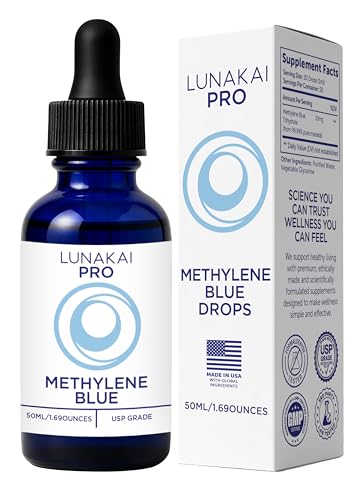
As an Amazon Associate we earn from qualifying purchases. Methylene blue grade matters more than price or color: only USP, BP, or EP pharmaceutical grade is appropriate for human use, and aquarium, histology or industrial dye grades are not substitutes. Ask for a lot-specific third-party certificate of analysis with numerical results covering azure B and heavy metals, since a bare percent-purity figure says nothing about the remaining fraction.


A Note on the Evidence
Neither methylene blue nor racetams are approved nootropics in the United States, and human evidence for cognitive enhancement in healthy adults is limited for both. Methylene blue carries a serious FDA drug-interaction warning for serotonin syndrome and is contraindicated in G6PD deficiency — anyone on prescription medications or with a known enzyme deficiency must consult a physician before considering it.
Frequently Asked Questions
Can you stack methylene blue with piracetam or aniracetam?
Mechanistically the combination is rational — one acts at the mitochondrial level, the other at the receptor level. In practice, adequate choline supplementation becomes more important when combining them, as both pathways increase acetylcholine demand. Anyone on serotonergic medications must not add methylene blue regardless of the racetam in use.
Is methylene blue a stronger nootropic than piracetam?
They are not directly comparable because they act through different mechanisms. Methylene blue has a more complex risk profile and narrower therapeutic window. Piracetam has a longer human research history across a broader population. ‘Stronger’ depends entirely on the cognitive target and the individual’s health context.
Why does methylene blue cause serotonin syndrome and racetams don't?
Methylene blue is a potent monoamine oxidase inhibitor, meaning it blocks the enzyme that breaks down serotonin, dopamine, and norepinephrine in the synapse. When combined with drugs that increase serotonin release or block its reuptake, synaptic serotonin accumulates to dangerous levels. Racetams do not meaningfully inhibit MAO and do not share this interaction profile.
What is G6PD deficiency and why does it matter for methylene blue?
Glucose-6-phosphate dehydrogenase (G6PD) deficiency is a common inherited enzyme deficiency affecting red blood cells. Methylene blue requires G6PD activity to be reduced to its active leuco form inside red blood cells. In G6PD-deficient individuals, methylene blue cannot be properly reduced and instead acts as an oxidizing agent, triggering severe hemolytic anemia. G6PD deficiency is a hard contraindication for methylene blue use.
Do racetams require choline supplementation?
Racetams increase acetylcholine synthesis and release, which can deplete choline stores if dietary intake is insufficient. Many experienced users co-supplement with alpha-GPC or CDP-choline to prevent the headaches commonly attributed to this depletion. This is a practical consideration rather than an absolute requirement.
Where does methylene blue fit compared to aniracetam specifically?
Aniracetam has a broader neurotransmitter profile than piracetam, with proposed effects on serotonin and dopamine receptor subtypes in addition to AMPA modulation. This makes the interaction profile with methylene blue (an MAOI) conceptually more complex than with piracetam, since methylene blue’s MAO inhibition could amplify monoamine effects that aniracetam also touches. This is not well-studied and underscores the need for clinical guidance when combining them.

References
- Methylene blue: a controversial diagnostic acid and medication? Toxicology Research (2022). PMID 36337249
- The Potentials of Methylene Blue as an Anti-Aging Drug. Cells (2021). PMID 34943887
- From Mitochondrial Function to Neuroprotection – an Emerging Role for Methylene Blue. Molecular Neurobiology (2018). PMID 28840449
These statements have not been evaluated by the Food and Drug Administration. This information is not intended to diagnose, treat, cure, or prevent any disease. Content is for informational purposes only and is not medical advice; consult a qualified healthcare provider before starting any supplement. As an Amazon Associate we earn from qualifying purchases.