Methylene Blue and Modafinil have both found their way into nootropic circles, but they arrive from completely different pharmacological worlds. Modafinil is a Schedule IV prescription wakefulness agent with decades of clinical use in narcolepsy and shift-work sleep disorder; Methylene Blue is a century-old dye and pharmaceutical agent, FDA-approved since 2016 for methemoglobinemia, now investigated for mitochondrial and neuroprotective effects. The fact that both are discussed as cognitive enhancers does not make them equivalent, interchangeable, or similarly safe.
This article compares the two compounds honestly — their proposed mechanisms, what limited evidence exists, and, critically, where their risk profiles diverge in ways that matter for anyone considering either. Neither should be approached casually, and this article is informational only, not medical advice.
Key Takeaways
- Methylene Blue and Modafinil work through entirely different mechanisms — Methylene Blue primarily targeting mitochondrial electron transport and Modafinil targeting dopamine and wake-promoting circuits.
- Methylene Blue carries two unique and serious risks absent from Modafinil: serotonin syndrome risk in anyone taking serotonergic medications (it is a potent MAOI) and life-threatening hemolytic anemia in G6PD-deficient individuals.
- Modafinil has a larger and better-controlled human evidence base for cognitive effects, which are most reliable in sleep-deprived states; Methylene Blue’s human cognitive evidence is limited and early-stage.
- Only USP-grade Methylene Blue is appropriate for human use; industrial or histology-grade material is not safe regardless of how it is marketed.
- Both compounds require medical consultation before use — Modafinil by legal prescription requirement and Methylene Blue due to its serious contraindications and drug interactions.
What Is Methylene Blue? Mechanism and Proposed Cognitive Effects
Methylene Blue (methylthioninium chloride) has been in clinical use since the 1890s, primarily as an antidote for methemoglobinemia and as a surgical dye. Its modern nootropic interest stems from a specific proposed mechanism: at low doses (roughly 0.5–4 mg/kg), it is hypothesized to act as an alternative electron carrier in the mitochondrial electron transport chain, donating electrons to cytochrome c oxidase (Complex IV) and thereby supporting ATP production in neurons under metabolic stress.
Additionally, Methylene Blue has been investigated for its potential to upregulate Complex I and Complex IV activity, scavenge reactive oxygen species at low doses, and inhibit tau protein aggregation — a pathological feature of several neurodegenerative diseases. It is also a potent monoamine oxidase inhibitor (MAOI), which has both proposed mood-related benefits and serious drug interaction consequences discussed below.
What Is Modafinil? Mechanism and Clinical Evidence
Modafinil is a eugeroic (wakefulness-promoting) agent approved by the FDA for narcolepsy, obstructive sleep apnea with residual sleepiness, and shift-work sleep disorder. Its primary mechanism involves inhibition of dopamine reuptake via the dopamine transporter (DAT), with secondary effects on norepinephrine, serotonin, orexin (hypocretin), and histamine systems. The orexinergic activation is thought to contribute to its wake-promoting quality without the jitteriness associated with amphetamines.
Modafinil’s cognitive enhancement evidence in healthy, non-sleep-deprived individuals is more measured than its off-label reputation suggests. Effects on working memory, executive function, and sustained attention have been studied, with the strongest and most consistent effects appearing in the context of sleep deprivation rather than baseline enhancement. It is a Schedule IV controlled substance in the United States, meaning it has recognized abuse potential and requires a prescription.

Armodafinil, the R-enantiomer of Modafinil, has a longer half-life and is considered slightly more potent per milligram. Both carry the same risk profile, including a rare but serious risk of Stevens-Johnson syndrome and serious skin reactions, which are listed as black box warnings in the prescribing information.

Safety Profile: Where Methylene Blue Carries Unique and Serious Risks
Methylene Blue’s risk profile is shaped by two properties that have no parallel in Modafinil. First, it is a potent MAOI. The FDA issued a safety communication warning that Methylene Blue administered intravenously (as in sentinel node mapping or methemoglobinemia treatment) can cause serotonin syndrome when combined with serotonergic drugs — including SSRIs, SNRIs, tramadol, linezolid, and other MAOIs. This risk extends to oral use at doses relevant to cognitive enhancement applications. Anyone taking serotonergic medications must treat this as an absolute contraindication.
Second, Methylene Blue is absolutely contraindicated in individuals with glucose-6-phosphate dehydrogenase (G6PD) deficiency. In G6PD-deficient individuals, the compound triggers severe hemolytic anemia — the opposite of its intended therapeutic effect. G6PD deficiency is more common than many people realize, affecting an estimated 400 million people globally, and is particularly prevalent in populations of African, Mediterranean, and South Asian descent. Testing for G6PD status before any use is essential.
A third paradox is dose-dependent toxicity: at high doses (above approximately 4 mg/kg), Methylene Blue can itself cause methemoglobinemia — the very condition it is FDA-approved to treat at low doses. This dose-response inversion means that more is not better and that the therapeutic window is narrow. Only USP-grade (pharmaceutical-purity) Methylene Blue is appropriate for human use; industrial or histology-grade material contains impurities that make it unsuitable and potentially dangerous.
Safety Profile: Modafinil's Risks and Controlled Status
Modafinil is generally well-tolerated in clinical settings, with headache, nausea, anxiety, and insomnia as the most commonly reported side effects. Its Schedule IV classification reflects recognized potential for dependence and misuse, though its abuse liability is considered lower than that of amphetamines. Cardiovascular monitoring is recommended in patients with pre-existing heart conditions, as modest increases in heart rate and blood pressure have been observed.
The serious skin reaction risk — Stevens-Johnson syndrome and toxic epidermal necrolysis — is rare but potentially life-threatening. Modafinil also induces CYP3A4 enzymes, which can reduce the efficacy of hormonal contraceptives and other medications metabolized by that pathway. These are pharmacological facts, not reasons to panic, but they underscore that Modafinil is a drug requiring medical oversight, not a supplement.
Evidence Base: How Do the Two Compare?
Modafinil has a substantially larger clinical evidence base than Methylene Blue for cognitive applications, simply because it has been prescribed and studied for decades in narcolepsy populations and has been the subject of numerous controlled trials. Its cognitive effects in healthy adults are real but modest and most pronounced under conditions of sleep loss or fatigue — a narrower effect than its reputation implies.
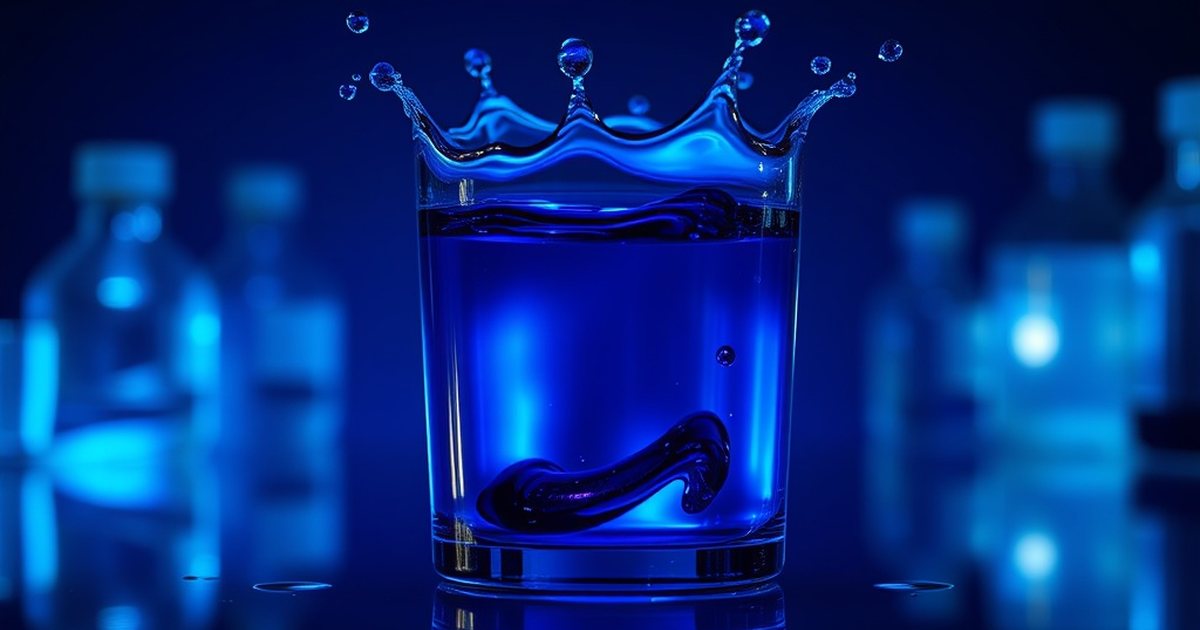
Methylene Blue’s nootropic evidence base is earlier-stage and predominantly preclinical. Research has explored its effects on memory consolidation in rodent models and its mitochondrial mechanisms in cell lines and animal studies. Human trials are limited in number and sample size. It is also worth noting that Methylene Blue turns urine (and sometimes saliva) blue at active doses, which complicates blinding in trials and introduces a risk of placebo confounding. Claims about its cognitive effects in healthy humans should be held to a higher standard of evidence than is currently available.
Neither compound has been studied specifically as a head-to-head cognitive comparison in a rigorous trial. Any comparison between them is necessarily indirect and inferential.
Practical Considerations: Legal Status, Access, and Grade
Modafinil is a prescription medication in the United States, the UK, Canada, Australia, and most regulated markets. Obtaining it without a prescription is illegal in those jurisdictions and purchasing it from online pharmacies that do not require one is both legally and medically risky due to quality control concerns.
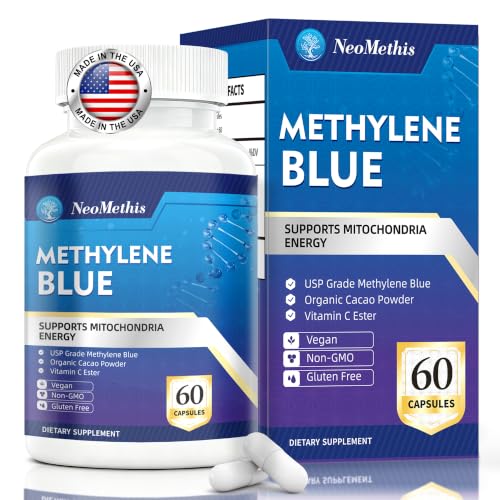
Methylene Blue occupies a different regulatory space. USP-grade Methylene Blue is available without a prescription in some markets, but this does not mean it is unregulated or low-risk. The purity point is critical: laboratory or industrial-grade Methylene Blue — which is widely available and cheap — contains heavy metals and other impurities that make it inappropriate for human consumption. Only pharmaceutical-grade (USP or equivalent) product should be considered, and even then, the serious contraindications and drug interactions described above apply fully.
🛒 Where to Buy Methylene Blue
- Troscriptions Blue CannatineLab-tested / studied
sublingual troches, 4 mg methylene blue + 4 mg nicotine + 50 mg caffeine + 200 mg alpha-GPC per troche — Flagship stacked nootropic troche from Troscriptions (founded by physician Ted Achacoso MD); pharmaceutical-grade MB combined with cholinergic and stimulant cofactors; widely regarded as the benchmark MB product in the nootropic community. Confirm drug interaction checklist before use. - Double Wood Supplements Methylene Blue
capsules, 5 mg per capsule — Accessible entry-point brand widely available on Amazon; transparent third-party testing; one of the few capsule-form MB products from an established U.S. supplement company; good for low-dose protocols. - Health Natura Methylene Blue USP Solution
liquid, 0.5% solution, approximately 2.5 mg per 5 drops — Long-standing liquid MB brand; clear USP-grade labeling; 0.5% concentration referenced in historical clinical protocols; glass dropper bottle; available on Amazon. - BulkSupplements Methylene Blue Powder
powder, Variable — sold as raw tested powder; requires accurate milligram scale — Lowest cost-per-dose option for experienced users; lab-tested with published COA; not recommended for anyone new to the compound given the critical importance of accurate low-dose measurement.
As an Amazon Associate we earn from qualifying purchases. Methylene blue grade matters more than price or color: only USP, BP, or EP pharmaceutical grade is appropriate for human use, and aquarium, histology or industrial dye grades are not substitutes. Ask for a lot-specific third-party certificate of analysis with numerical results covering azure B and heavy metals, since a bare percent-purity figure says nothing about the remaining fraction.
A Note on the Evidence
This article compares the two compounds on mechanism, regulatory status and risk profile rather than ranking them on trial outcomes, because the two evidence bases are not directly comparable: modafinil has been tested in large trials for its approved indications, while methylene blue’s cognitive data in healthy adults comes from small imaging studies. Neither Methylene Blue nor Modafinil should be used without consulting a qualified healthcare provider, particularly given Methylene Blue’s absolute contraindication in G6PD deficiency and its serious interactions with serotonergic medications.


Frequently Asked Questions
Can you take Methylene Blue and Modafinil together?
This combination has not been studied and should not be assumed safe. Modafinil has serotonergic activity, and Methylene Blue is a potent MAOI; combining MAOIs with drugs that affect serotonin carries serotonin syndrome risk. A prescribing physician would need to evaluate this interaction specifically for your situation.
Is Methylene Blue legal to buy without a prescription?
In some jurisdictions, USP-grade Methylene Blue can be purchased without a prescription, but this varies by country. Legal availability does not equate to safety; the compound’s serious drug interactions and contraindications apply regardless of how it was obtained.

Does Modafinil actually improve cognition in people who are not sleep-deprived?
The evidence in non-sleep-deprived healthy adults is more modest than popular accounts suggest. Effects on working memory and attention have been observed in some studies, but the magnitude is smaller than in fatigued or sleep-deprived populations, and individual responses vary considerably.
What is G6PD deficiency and how do I know if I have it?
G6PD (glucose-6-phosphate dehydrogenase) deficiency is a hereditary enzyme disorder affecting red blood cells, making individuals susceptible to hemolytic anemia when exposed to certain triggers including Methylene Blue. It is diagnosed via a simple blood test. It is more prevalent in people of African, Mediterranean, Middle Eastern, and South Asian descent. Testing is essential before any use of Methylene Blue.
What does 'USP-grade' mean and why does it matter for Methylene Blue?
USP (United States Pharmacopeia) grade indicates that a substance meets pharmaceutical purity standards, including limits on heavy metal contamination and impurities. Industrial or laboratory-grade Methylene Blue, sold for staining or aquarium use, does not meet these standards and may contain toxic contaminants. Only pharmaceutical-grade product is appropriate for human use.
Are there natural alternatives that support mitochondrial energy without these risks?
Compounds such as CoQ10, PQQ, and NMN are widely studied for mitochondrial support with more favorable safety profiles, though their evidence base for cognitive enhancement in healthy adults also has limitations. Shilajit, which contains fulvic acid and dibenzo-alpha-pyrones proposed to support mitochondrial complex activity, is another area of active early-stage research. None of these are equivalent to Methylene Blue pharmacologically, and the evidence should be evaluated individually.
These statements have not been evaluated by the Food and Drug Administration. This information is not intended to diagnose, treat, cure, or prevent any disease. Content is for informational purposes only and is not medical advice; consult a qualified healthcare provider before starting any supplement. As an Amazon Associate we earn from qualifying purchases.