Methylene blue (methylthioninium chloride) is a century-old pharmaceutical compound that has moved from hospital infusion rooms into a growing nootropic and longevity conversation. Unlike most supplements that arrive in one standard form, methylene blue is now sold as aqueous liquid drops, encapsulated powder, and sublingual troches — and the form you choose has real consequences for how quickly it absorbs, how much dye contacts your tissues directly, and how easily you can control dosing.
Understanding the differences matters for practical reasons beyond convenience. Each delivery format changes the rate and site of absorption, influences bioavailability, and affects how precisely a user can titrate to low, potentially beneficial doses while staying well below the threshold at which methylene blue paradoxically worsens oxidative stress rather than relieving it. This article breaks down each form honestly, without exaggerating the current evidence base.
Key Takeaways
- Liquid drops allow the most precise micro-dosing but require careful measurement and carry the highest staining risk during preparation.
- Capsules offer daily convenience and consistent pre-measured doses but have slower, less predictable absorption than sublingual routes.
- Sublingual troches may provide faster absorption by bypassing first-pass metabolism, and are most reliably obtained through licensed compounding pharmacies.
- Form does not change pharmacology: serotonin syndrome risk, G6PD contraindication, and dose-dependent toxicity apply equally across all delivery formats.[1]
- USP-grade (pharmaceutical-grade) purity is non-negotiable for any form; industrial or laboratory-grade methylene blue contains impurities unsafe for human consumption.
What Methylene Blue Is — and Why Form Matters
Methylene blue is a synthetic phenothiazine dye with a complex pharmacological profile. At low doses (typically cited in the range of 0.5–4 mg/kg), it is proposed to act as an alternative electron carrier in the mitochondrial respiratory chain, shuttling electrons between NADH and cytochrome c and potentially supporting Complex I and Complex IV activity.[2] This electron-carrier hypothesis underlies much of the nootropic interest in the compound. At higher doses, however, it can overwhelm this mechanism and generate reactive oxygen species, producing the opposite effect.
Methylene blue is also a potent monoamine oxidase inhibitor (MAOI) and carries a serious FDA drug-interaction warning for serotonin syndrome when combined with SSRIs, SNRIs, other MAOIs, tramadol, or linezolid. It is absolutely contraindicated in G6PD deficiency, where it triggers severe hemolytic anemia. These warnings apply regardless of the delivery form — liquid, capsule, or troche. Purity is equally non-negotiable: only USP-grade (pharmaceutical-grade) methylene blue is appropriate for human use. Industrial, laboratory, or histology-grade material contains toxic impurities and should never be consumed.
With those foundations in place, the form a product takes determines speed of onset, site of absorption, ease of dose adjustment, and tolerability of the characteristic blue staining it causes.
Liquid Drops: Flexibility at the Cost of Staining
Aqueous methylene blue solutions are the oldest and most direct format. A pharmaceutical-grade liquid preparation can be diluted in water and consumed orally, producing absorption primarily through the gastrointestinal mucosa. The main advantage is precise micro-dosing: because the active compound is dissolved, small volume adjustments translate directly into dose adjustments without the granularity limitations of a capsule. Users targeting very low doses — sometimes described as ‘microdosing’ in the range of 0.5–1 mg — find liquid the easiest format to achieve that precision.
The primary drawbacks of liquid drops are cosmetic and practical. Methylene blue stains intensely: it will temporarily turn saliva, urine, and mucous membranes blue or green, stain teeth, clothing, and countertops on contact, and is difficult to remove from porous surfaces. Accurate dosing from a dropper also requires a calibrated bottle; poorly labeled products introduce risk. Storage matters as well — light degrades methylene blue solutions over time, so pharmaceutical preparations are typically sold in amber glass and should be kept away from direct light.

Concentration varies widely between products. A solution labeled ‘1% methylene blue’ contains 10 mg per mL; a ‘0.1%’ solution contains 1 mg per mL. Consumers must verify the concentration on their specific product before calculating a dose, and should purchase only from suppliers who provide third-party USP-purity certificates.

Capsules: Convenience and Consistency, Delayed Onset
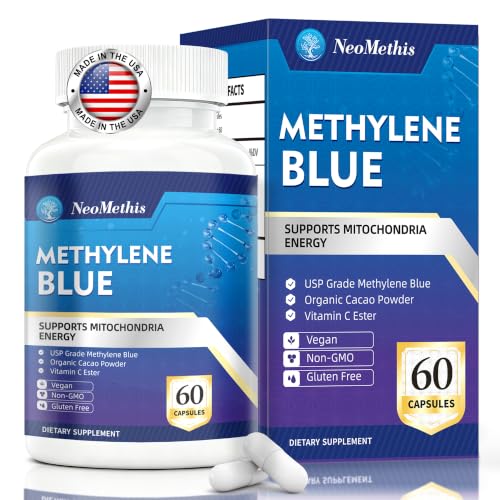
Encapsulated methylene blue — usually a dry powder or crystalline methylene blue inside a gelatin or vegetable cellulose capsule — is the most familiar supplement format. Capsules are easy to transport, do not require measuring, and reduce the staining contact that liquid drops create during preparation. Pre-measured doses provide consistency across days, which is relevant if someone is attempting a consistent low-dose protocol.
The trade-off is absorption timing. A capsule must first dissolve in the stomach, releasing the compound for uptake in the small intestine. Onset of any subjective effect is therefore slower than sublingual or liquid oral routes — typically 30–60 minutes or more, varying by gastric contents and individual physiology. Enteric-coated capsules would delay this further. For users interested in timing methylene blue around specific cognitive tasks or exercise windows, a capsule’s slower and less predictable onset may be a limitation.
Dose granularity is also constrained: capsules are manufactured in fixed amounts (commonly 10 mg, 15 mg, or 50 mg), so splitting doses requires opening capsules and re-weighing — which reintroduces the staining and measurement challenges of working with raw powder. As with all forms, capsules must be sourced from suppliers who document USP-grade purity; the capsule format does not neutralize contaminants present in lower-grade starting material.
Sublingual Troches: Faster Absorption, Bypassing First-Pass Metabolism
A troche (pronounced ‘tro-key’) is a medicated lozenge designed to dissolve slowly under the tongue or against the cheek mucosa. The sublingual and buccal tissues are richly vascularized and allow compounds to enter the bloodstream directly, bypassing the gastrointestinal tract and liver first-pass metabolism. For methylene blue, this means a faster onset of absorption compared to swallowed capsules and potentially higher effective bioavailability for a given nominal dose.
Troches are typically compounded by a licensed compounding pharmacy to a physician-specified strength and formulation, though some commercial preparations exist. The format also reduces the vivid blue staining of teeth and oral mucosa somewhat compared to holding liquid in the mouth — though some discoloration is unavoidable given the compound’s dye nature. Troches sit at a middle point between the micro-dosing flexibility of liquid and the convenience of capsules, combining relatively fast onset with a defined dose per unit.
The primary limitation is access: high-quality troches are most reliably obtained through compounding pharmacies working with a prescribing clinician, and commercial over-the-counter troches vary in the rigor of their purity documentation. Anyone considering troches should verify the compounding pharmacy’s USP compliance and request a certificate of analysis.
Comparing the Three Forms: A Practical Summary
For dose precision and flexibility at very low amounts, pharmaceutical-grade liquid drops offer the most control — at the cost of staining risk and the need for careful measurement. For daily convenience and consistency without preparation, capsules are the most practical format, accepting the trade-off of slower and less predictable onset. For users prioritizing faster absorption and willing to access a compounding pharmacy, sublingual troches represent a middle ground with potentially better bioavailability than swallowed capsules.
No form eliminates methylene blue’s interaction risks or contraindications. Serotonin syndrome risk from co-administration with serotonergic medications is a pharmacological property of the molecule itself, not the delivery vehicle. G6PD deficiency remains an absolute contraindication across all forms. The dose-dependency of benefit versus harm — where higher doses can cause the methemoglobinemia the compound is FDA-approved to treat at low doses — applies identically to liquid, capsule, and troche. These are drug safety considerations, not supplement safety considerations.
Purity, Sourcing, and What 'USP Grade' Actually Means
The distinction between USP-grade methylene blue and industrial or laboratory-grade material is not a marketing claim — it reflects genuinely different impurity profiles. Industrial methylene blue, widely available at very low cost, is manufactured to standards appropriate for dyeing textiles or staining microscope slides. It may contain heavy metals, residual solvents, and synthesis byproducts that are inconsequential for those applications but toxic when ingested. USP-grade material must meet United States Pharmacopeia standards for identity, purity, and potency, and reputable suppliers provide certificates of analysis confirming compliance.
When evaluating any methylene blue product — regardless of form — the minimum documentation to look for is a third-party certificate of analysis confirming USP-grade purity (greater than 99% purity for the active compound) and absence of heavy metal contaminants. Products that do not provide this documentation should not be used for human consumption. The compounding pharmacy route for troches typically offers the clearest chain of pharmaceutical-grade sourcing, since licensed compounding pharmacies operate under FDA oversight and are required to use pharmaceutical-grade starting materials.
🛒 Where to Buy Methylene Blue
- Troscriptions Blue CannatineLab-tested / studied
sublingual troches, 4 mg methylene blue + 4 mg nicotine + 50 mg caffeine + 200 mg alpha-GPC per troche — Flagship stacked nootropic troche from Troscriptions (founded by physician Ted Achacoso MD); pharmaceutical-grade MB combined with cholinergic and stimulant cofactors; widely regarded as the benchmark MB product in the nootropic community. Confirm drug interaction checklist before use. - Double Wood Supplements Methylene Blue
capsules, 5 mg per capsule — Accessible entry-point brand widely available on Amazon; transparent third-party testing; one of the few capsule-form MB products from an established U.S. supplement company; good for low-dose protocols. - Health Natura Methylene Blue USP Solution
liquid, 0.5% solution, approximately 2.5 mg per 5 drops — Long-standing liquid MB brand; clear USP-grade labeling; 0.5% concentration referenced in historical clinical protocols; glass dropper bottle; available on Amazon. - BulkSupplements Methylene Blue Powder
powder, Variable — sold as raw tested powder; requires accurate milligram scale — Lowest cost-per-dose option for experienced users; lab-tested with published COA; not recommended for anyone new to the compound given the critical importance of accurate low-dose measurement.
As an Amazon Associate we earn from qualifying purchases. Methylene blue grade matters more than price or color: only USP, BP, or EP pharmaceutical grade is appropriate for human use, and aquarium, histology or industrial dye grades are not substitutes. Ask for a lot-specific third-party certificate of analysis with numerical results covering azure B and heavy metals, since a bare percent-purity figure says nothing about the remaining fraction.

A Note on the Evidence
The evidence base for methylene blue as a nootropic or longevity compound in healthy humans remains limited; most mechanistic findings come from in vitro or animal studies, and robust large-scale human clinical trials are lacking. Methylene blue is a pharmacologically potent compound — not a benign supplement — and should not be used without consulting a qualified physician, particularly by anyone taking serotonergic medications, anyone with G6PD deficiency, pregnant or nursing individuals, or those with cardiovascular or hepatic conditions.
Frequently Asked Questions
Which form of methylene blue absorbs fastest?
Sublingual troches and liquid held sublingually are expected to absorb most quickly because compounds cross directly into the bloodstream through oral mucosa, bypassing gastric digestion and liver first-pass metabolism. Swallowed capsules depend on capsule dissolution and intestinal absorption, producing a slower and more variable onset. No head-to-head human pharmacokinetic trials comparing these specific commercial forms were available at the time of writing.
Can I convert between forms — for example, open a capsule and dissolve it in water to make a liquid?
In principle, pharmaceutical-grade methylene blue powder dissolves readily in water, so a capsule’s contents could be dissolved and measured as a liquid dose. However, this introduces the need for an accurate scale (powder amounts at typical doses are very small), increases staining risk, and requires careful hygiene to avoid cross-contamination. It also risks inaccurate dosing if the powder does not distribute evenly in the solution. Working with an already-calibrated liquid preparation or a compounded troche is generally more reliable.
Will methylene blue turn my urine blue regardless of form?
Yes. Blue or green-tinged urine is a predictable pharmacological effect of methylene blue at typical doses and occurs with all delivery forms. It reflects renal excretion of the compound and its metabolites and is not a sign of harm in healthy individuals without G6PD deficiency. The color intensity varies with dose and hydration. Patients with G6PD deficiency should not take methylene blue in any form.
Is a troche the same as a sublingual tablet?
They are similar but not identical. Both are designed for absorption through oral mucosa rather than swallowing, and both bypass gastrointestinal digestion. Troches are typically softer, slower-dissolving lozenges intended to be held in the cheek or under the tongue until fully dissolved. Sublingual tablets are harder compressed forms designed specifically for under-tongue placement and faster dissolution. Compounding pharmacies produce both formats; the specific absorption profile depends on the formulation details.
Why does purity matter more for methylene blue than for many other supplements?
Methylene blue is a potent pharmacologically active compound taken at milligram-level doses rather than gram-level doses, which means impurities present even at small percentages by weight represent a larger pharmacological concern relative to dose size. Additionally, the cost difference between industrial and USP-grade material creates a strong economic incentive for suppliers to use lower-grade starting material, making third-party purity verification particularly important. Industrial-grade material can contain arsenic, lead, and zinc at levels that are genuinely dangerous at human consumption doses.
Can I take methylene blue if I am on an antidepressant?
No — this combination carries a serious FDA-documented risk of serotonin syndrome, a potentially life-threatening condition. Methylene blue is a potent MAO inhibitor, and combining any MAO inhibitor with SSRIs, SNRIs, or other serotonergic medications can cause dangerous accumulation of serotonin. This contraindication applies to all forms and all doses of methylene blue. Consult your prescribing physician before considering methylene blue if you take any psychiatric or pain medications.
References
- Methylene blue: a controversial diagnostic acid and medication? Toxicology Research (2022). PMID 36337249
- From Mitochondrial Function to Neuroprotection – an Emerging Role for Methylene Blue. Molecular Neurobiology (2018). PMID 28840449
These statements have not been evaluated by the Food and Drug Administration. This information is not intended to diagnose, treat, cure, or prevent any disease. Content is for informational purposes only and is not medical advice; consult a qualified healthcare provider before starting any supplement. As an Amazon Associate we earn from qualifying purchases.