Methylene blue (methylthioninium chloride) is a synthetic phenothiazine dye with more than a century of clinical use, best known as an FDA-approved treatment for drug-induced methemoglobinemia. In recent years, researchers and biohackers have turned attention to a striking pharmacological property: at low doses, methylene blue appears to behave as an antioxidant and mitochondrial support agent, while at higher doses it can paradoxically generate the very reactive oxygen species (ROS) it seems to suppress at lower concentrations. This dose-dependent inversion sits at the center of current scientific interest.
Understanding what the existing evidence actually shows — and where it falls short — matters enormously before anyone considers methylene blue for oxidative stress management. The human data remain sparse, most mechanistic work comes from cell cultures and animal models, and the compound carries genuine safety risks including a serious FDA drug-interaction warning for serotonin syndrome. This article walks through the proposed biology plainly, cites only available primary evidence, and is intended as informational content, not medical advice.
Key Takeaways
- Methylene blue’s antioxidant effect is dose-dependent and paradoxical: low doses may reduce ROS via mitochondrial electron shuttling, while high doses above approximately 4 mg/kg can generate oxidative stress.
- Research confirms methylene blue is a genuine redox-active compound that interacts with oxidative stress signaling pathways [1], but human clinical evidence for antioxidant benefit remains very limited.
- Methylene blue is a potent MAOI and carries an FDA warning for serotonin syndrome when combined with SSRIs, SNRIs, tramadol, or other serotonergic drugs.
- G6PD deficiency is an absolute contraindication; the drug can cause severe hemolytic anemia in affected individuals.
- Only pharmaceutical-grade (USP) methylene blue is appropriate for human use; industrial and lab-grade products contain harmful impurities.
What Is Oxidative Stress and Why Does It Matter?
Oxidative stress occurs when the production of reactive oxygen species — unstable molecules such as superoxide, hydrogen peroxide, and hydroxyl radicals — outpaces the cell’s antioxidant defenses. ROS are normal byproducts of aerobic metabolism, particularly at mitochondrial respiratory chain complexes, but when they accumulate they damage lipids, proteins, and DNA. Chronic oxidative stress is implicated in aging, neurodegeneration, cardiovascular disease, and metabolic dysfunction.
Antioxidant strategies range from dietary polyphenols to enzymatic systems like superoxide dismutase and catalase. Methylene blue occupies an unusual niche in this space: it is a small, highly cell-permeable redox-active molecule capable of cycling between its oxidized (blue) and reduced (colorless, leucomethylene blue) states. This redox cycling is central to both its therapeutic uses and its potential — and risks — as an antioxidant agent.
The Paradox: Antioxidant at Low Doses, Pro-Oxidant at High Doses
The most important concept for understanding methylene blue and ROS is hormesis-like dose dependency. At concentrations typically discussed in nootropic contexts — roughly 0.5 to 4 mg/kg body weight, and more experimentally in the nanomolar-to-low-micromolar range in cell studies — methylene blue has been proposed to donate electrons into the mitochondrial electron transport chain, diverting them away from molecular oxygen before superoxide can form. This is sometimes called the ‘electron shuttle’ mechanism.
Above approximately 4 mg/kg, the same redox cycling that appears protective at low doses begins to generate ROS rather than suppress them. At very high doses, methylene blue can itself induce methemoglobin formation — the exact pathology it is approved to treat at therapeutic doses. This dose-response reversal is not a minor footnote; it defines the entire risk-benefit calculus and means that ‘more is not better’ in an unusually direct way.
This paradoxical behavior is consistent with a broader class of redox-active compounds where moderate electron shuttling supports cellular homeostasis but unchecked cycling overwhelms antioxidant buffers. Anyone evaluating methylene blue for oxidative stress should treat the dose boundary as the most critical variable, not an afterthought.


Proposed Mitochondrial Mechanisms
The primary mechanistic hypothesis for low-dose methylene blue as an antioxidant centers on mitochondrial Complex I and Complex IV (cytochrome c oxidase). Mitochondria generate ATP through a chain of electron transfers; when this chain is inefficient or partially blocked, electrons ‘leak’ onto molecular oxygen, forming superoxide. Methylene blue is proposed to accept electrons directly from NADH (at Complex I) and donate them to cytochrome c, effectively bypassing a bottleneck and reducing the likelihood of electron leak.
Some preclinical research also suggests methylene blue may upregulate cytochrome c oxidase activity and support mitochondrial membrane potential, both of which are associated with more efficient oxidative phosphorylation and less ROS production as a side effect. Additionally, in its reduced (leucomethylene blue) form, the molecule can directly neutralize certain ROS species, adding a direct scavenging mechanism on top of the proposed electron-shuttle effect.
It is important to be clear that these mechanisms are proposed on the basis of cell culture and animal data; large, well-controlled human trials demonstrating that oral methylene blue meaningfully reduces systemic oxidative stress markers in healthy people are not yet available. The mechanistic picture is biologically plausible but not yet clinically established.
What the Bacterial Research Tells Us About Oxidative Signaling
A 2020 study published in Chemico-Biological Interactions examined methylene blue’s interaction with the soxRS regulon of Escherichia coli [1]. The soxRS system is a bacterial oxidative stress response network activated by superoxide and redox-cycling compounds; when triggered, it upregulates defenses including superoxide dismutase and drug efflux pumps. The finding that methylene blue induces this regulon indicates the compound can activate oxidative stress signaling pathways even in prokaryotic systems [1].
This result is instructive in two ways. First, it confirms that methylene blue is a genuine redox-active agent capable of interacting with cellular oxidative stress machinery — not merely a colorful placebo. Second, it underscores the paradox: a compound that can activate bacterial ROS-response genes is not a simple, one-directional antioxidant. The context, dose, and biological system all determine whether the net effect is protective or stressful. Translating findings from E. coli oxidative stress pathways to human cells requires significant caution, but the basic chemistry of redox cycling is conserved across life.
Neurological Interest: Tau, Neurodegeneration, and Brain Oxidative Stress
A separate but related line of investigation concerns methylene blue’s proposed role in neurodegeneration. Oxidative stress and mitochondrial dysfunction are prominent features of Alzheimer’s disease, and methylene blue has been studied as a tau aggregation inhibitor — tau tangles being a hallmark pathology of Alzheimer’s. Some researchers have proposed that the compound’s ability to support mitochondrial function and reduce ROS in neurons could be relevant to slowing neurodegeneration.
Clinical trials have been conducted using methylthioninium-based compounds in Alzheimer’s patients, with mixed and contested results. The largest of those trials randomised 598 amyloid-PET-positive participants to hydromethylthionine mesylate or a low-dose methylthioninium comparator and could not demonstrate a difference on its co-primary cognitive and functional endpoints at 52 weeks, which the investigators attribute to unexpected symptomatic activity in the arm intended as an inactive control[2] — the same design problem that has made this programme’s earlier Phase 3 results contested[3]. It would be inaccurate to present neurodegeneration prevention as an established clinical benefit. This remains an active and unresolved area of research. The connection between methylene blue’s antioxidant properties and any neuroprotective effect in humans has not been definitively established.
Safety Profile, Contraindications, and Drug Interactions
Methylene blue carries a serious FDA drug-interaction warning: because it is a potent monoamine oxidase inhibitor (MAOI), co-administration with serotonergic drugs — including SSRIs, SNRIs, tramadol, linezolid, and other MAOIs — can trigger serotonin syndrome, a potentially life-threatening condition characterized by hyperthermia, agitation, rapid heart rate, and neuromuscular abnormalities. This is not a theoretical risk; it has been documented in surgical patients receiving intraoperative methylene blue alongside antidepressants.
Methylene blue is absolutely contraindicated in individuals with glucose-6-phosphate dehydrogenase (G6PD) deficiency. In G6PD-deficient patients, the drug cannot be properly reduced back to leucomethylene blue, leading instead to methemoglobin formation and severe hemolytic anemia — the exact opposite of its intended therapeutic effect. G6PD deficiency is more common in individuals of African, Mediterranean, Middle Eastern, and South Asian ancestry and is often undiagnosed.
Only USP-grade (pharmaceutical-purity) methylene blue is appropriate for any human use. Industrial-grade and histology-grade methylene blue products contain toxic impurities including heavy metals and are not safe for consumption regardless of dose. Anyone sourcing methylene blue outside of a pharmacy or licensed compounding facility faces serious contamination risk.
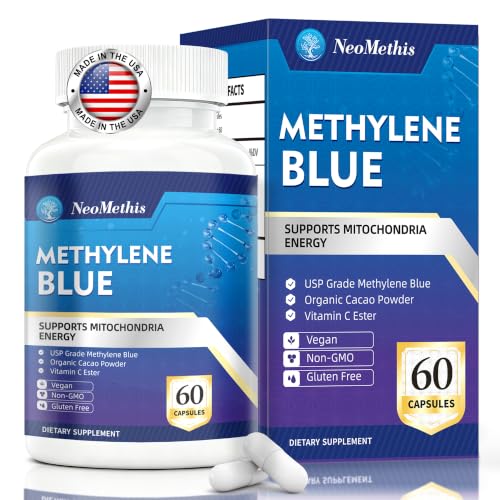
🛒 Where to Buy Methylene Blue
- Troscriptions Blue CannatineLab-tested / studied
sublingual troches, 4 mg methylene blue + 4 mg nicotine + 50 mg caffeine + 200 mg alpha-GPC per troche — Flagship stacked nootropic troche from Troscriptions (founded by physician Ted Achacoso MD); pharmaceutical-grade MB combined with cholinergic and stimulant cofactors; widely regarded as the benchmark MB product in the nootropic community. Confirm drug interaction checklist before use. - Double Wood Supplements Methylene Blue
capsules, 5 mg per capsule — Accessible entry-point brand widely available on Amazon; transparent third-party testing; one of the few capsule-form MB products from an established U.S. supplement company; good for low-dose protocols. - Health Natura Methylene Blue USP Solution
liquid, 0.5% solution, approximately 2.5 mg per 5 drops — Long-standing liquid MB brand; clear USP-grade labeling; 0.5% concentration referenced in historical clinical protocols; glass dropper bottle; available on Amazon. - BulkSupplements Methylene Blue Powder
powder, Variable — sold as raw tested powder; requires accurate milligram scale — Lowest cost-per-dose option for experienced users; lab-tested with published COA; not recommended for anyone new to the compound given the critical importance of accurate low-dose measurement.
As an Amazon Associate we earn from qualifying purchases. Methylene blue grade matters more than price or color: only USP, BP, or EP pharmaceutical grade is appropriate for human use, and aquarium, histology or industrial dye grades are not substitutes. Ask for a lot-specific third-party certificate of analysis with numerical results covering azure B and heavy metals, since a bare percent-purity figure says nothing about the remaining fraction.

A Note on the Evidence
The human evidence base for methylene blue as an antioxidant supplement remains early-stage, with most mechanistic data from cell cultures, bacteria [1], and animal models rather than robust clinical trials. Individuals taking any serotonergic medication, those with G6PD deficiency, pregnant or breastfeeding individuals, and anyone with liver or kidney impairment should avoid methylene blue except under direct physician supervision. This article is informational only and does not constitute medical advice.
Frequently Asked Questions
How does methylene blue act as an antioxidant?
At low doses, methylene blue is proposed to shuttle electrons within the mitochondrial electron transport chain, reducing the likelihood that electrons leak onto molecular oxygen to form superoxide. Its reduced form (leucomethylene blue) can also directly neutralize certain reactive oxygen species. These mechanisms are supported primarily by cell and animal data rather than large human trials.
What does the bacterial research on methylene blue and oxidative stress show?
A 2020 study found that methylene blue induces the soxRS oxidative stress regulon in E. coli [1], a bacterial defense system activated by superoxide and redox-cycling agents. This confirms methylene blue interacts with oxidative stress machinery at a fundamental biochemical level, though translating bacterial findings to human biology requires caution.
Is methylene blue safe to take for oxidative stress?
Safety depends heavily on individual health status, medications, and product purity. Methylene blue has an FDA warning for serotonin syndrome when combined with common antidepressants, is contraindicated in G6PD deficiency, and can cause harm at high doses. Only pharmaceutical-grade product should be used, and use should be supervised by a physician.
What dose of methylene blue is considered 'low dose' for antioxidant purposes?
The range discussed in nootropic and research contexts generally falls below 4 mg/kg body weight, with many experimental protocols using doses of 0.5 to 2 mg/kg. Above approximately 4 mg/kg, the compound may begin to produce rather than reduce oxidative stress. There is no established optimal human dose for antioxidant purposes, and individual pharmacokinetics vary.
Can methylene blue interact with supplements or medications?
Yes, significantly. As a potent MAOI, methylene blue can cause serotonin syndrome with SSRIs, SNRIs, tramadol, linezolid, and other serotonergic agents. It may also interact with drugs metabolized by CYP enzyme pathways. Anyone taking any prescription medication should consult a physician before using methylene blue.
What grade of methylene blue is safe for human use?
Only USP-grade (pharmaceutical-purity) methylene blue is safe for human use. Lab, industrial, and histology-grade products are not manufactured to pharmaceutical standards and typically contain toxic impurities including heavy metals. These impurities are not removed by dilution and represent a separate and serious toxicity risk independent of dose.
References
- Kaur S et al. Methylene blue induces the soxRS regulon of Escherichia coli. Chemico-biological interactions (2020). PMID 32771325
- Wischik CM et al. Clinical, imaging and blood biomarker outcomes in a Phase 3 clinical trial of tau aggregation inhibitor hydromethylthionine mesylate in mild cognitive impairment and mild to moderate dementia due to Alzheimer’s disease. The journal of prevention of Alzheimer’s disease (2026). PMID 41570392
- Wischik CM et al. Oral Tau Aggregation Inhibitor for Alzheimer’s Disease: Design, Progress and Basis for Selection of the 16 mg/day Dose in a Phase 3, Randomized, Placebo-Controlled Trial of Hydromethylthionine Mesylate. The journal of prevention of Alzheimer’s disease (2022). PMID 36281683
These statements have not been evaluated by the Food and Drug Administration. This information is not intended to diagnose, treat, cure, or prevent any disease. Content is for informational purposes only and is not medical advice; consult a qualified healthcare provider before starting any supplement. As an Amazon Associate we earn from qualifying purchases.