Methylene blue (methylthioninium chloride) is a century-old pharmaceutical compound with an unusual dual identity: it is FDA-approved at low doses for treating methemoglobinemia, yet it has attracted growing interest in nootropic communities as a potential cognitive enhancer and energy support tool. Its proposed mechanisms are grounded in basic mitochondrial biochemistry, and researchers have explored its effects on neurodegeneration, mood, and cellular metabolism. Whether that science translates into meaningful relief from everyday brain fog or fatigue in healthy adults is a separate and largely unanswered question.
This article examines what is known about how methylene blue interacts with cellular energy systems, what community users report experiencing, and — critically — why its safety profile demands serious attention before anyone considers using it. Methylene blue is a potent monoamine oxidase (MAO) inhibitor carrying documented, potentially life-threatening drug interactions. It is not a supplement. It is not benign. Understanding the difference between an interesting mechanism and a safe, proven intervention is the core purpose of what follows.
Key Takeaways
- Methylene blue’s proposed benefits for brain fog and energy center on mitochondrial electron transport support and MAO inhibition — both mechanistically plausible, but not yet supported by well-powered human clinical trials for these specific complaints.
- Research highlights that metabolic disturbances play a meaningful role in cognitive and mental health symptoms [1], providing theoretical context for mitochondrial-targeting approaches, but this does not constitute direct evidence for methylene blue’s efficacy.
- Methylene blue is a potent MAO inhibitor and is absolutely contraindicated with SSRIs, SNRIs, tramadol, linezolid, and other serotonergic medications due to documented risk of serotonin syndrome [2].
- G6PD deficiency is a common, frequently undiagnosed contraindication; screening is essential because methylene blue can cause severe hemolytic anemia in affected individuals.
- Only USP pharmaceutical-grade methylene blue is appropriate for any human use; the dose-response is non-linear, and self-administration without medical oversight carries meaningful and well-documented risk.
What Is Methylene Blue?
Methylene blue is a synthetic phenothiazine dye first synthesized in 1876 and one of the oldest compounds still in active pharmaceutical use. In clinical medicine, its primary FDA-approved indication is methemoglobinemia — a condition in which hemoglobin is oxidized and loses its oxygen-carrying capacity. It has also been studied as a vasopressor adjunct in vasoplegic and septic shock, used as a sentinel dye in surgical procedures, and investigated as a photosensitizer in antimicrobial applications. Its role in intensive critical care settings is well-documented [2].
Interest in methylene blue has expanded beyond these established uses in recent years. Researchers and biohacking communities have pointed to its unusual redox chemistry: at low concentrations, methylene blue cycles between oxidized and reduced forms, allowing it to accept and donate electrons within the cell. This property underlies several proposed cognitive and energy-related mechanisms. However, this same chemistry — and the MAO inhibition discussed below — also explains why methylene blue carries a risk profile unlike any true dietary supplement.
Only pharmaceutical-grade (USP-grade) methylene blue is appropriate for any human use. Industrial dyes and biological staining reagents sold under the same name contain toxic impurities and must never be ingested. This is not a technicality — it is a foundational safety requirement.
Proposed Mechanisms: Mitochondria and Electron Transport
The most discussed proposed mechanism for methylene blue’s cognitive effects involves the mitochondrial electron transport chain (ETC). At low doses, methylene blue can function as an alternative electron carrier between NADH and cytochrome c, providing a partial bypass around Complex I — one of the ETC sites most vulnerable to oxidative damage and age-related decline. Theoretically, this allows mitochondria to maintain ATP production even when the standard electron transport chain is partially impaired.
Methylene blue has also been proposed to upregulate cytochrome c oxidase (Complex IV) activity, the terminal enzyme of the ETC and a key determinant of overall mitochondrial efficiency. Greater Complex IV activity translates to more efficient oxygen utilization and higher ATP yield. Neurons are among the most energetically demanding cells in the body, consuming a disproportionate share of total cellular ATP, which makes them acutely sensitive to mitochondrial impairment and theoretically responsive to interventions that restore ETC function.
At low doses, methylene blue may also act as a reactive oxygen species (ROS) scavenger, neutralizing free radicals generated as a byproduct of mitochondrial activity. This effect appears strongly dose-dependent: at higher concentrations, methylene blue can actually amplify ROS production rather than suppress it. This inverted dose-response — beneficial at very low doses, harmful at higher ones — is one of the defining pharmacological features of the compound and a key reason why dosing precision matters.

MAO Inhibition and Its Double-Edged Consequences
Methylene blue is a potent inhibitor of monoamine oxidase, particularly MAO-A. MAO enzymes are responsible for breaking down monoamine neurotransmitters including serotonin, dopamine, and norepinephrine. By inhibiting MAO, methylene blue allows these neurotransmitters to accumulate at the synapse, which could theoretically contribute to improved mood, motivation, and cognitive energy — effects that some users attribute to their self-reported experiences.
However, this same property is responsible for methylene blue’s most serious clinical hazard. When methylene blue is co-administered with serotonergic medications — including SSRIs, SNRIs, tramadol, linezolid, and other MAOIs — the combined serotonergic load can trigger serotonin syndrome. This is a potentially fatal toxidrome characterized by agitation, tremor, hyperthermia, autonomic instability, and in severe cases, death. The FDA issued a drug safety communication specifically warning about this interaction. Cases have occurred in patients receiving intravenous methylene blue in surgical settings who were also taking antidepressants, and clinicians now screen for serotonergic drug use before administering it [2].
For anyone currently taking an antidepressant, pain medication with serotonergic activity, or any other drug that affects serotonin, methylene blue is absolutely contraindicated. This is not a theoretical caution — it is a documented clinical reality that has resulted in serious harm.
Brain Fog, Fatigue, and the Metabolic Framework
Brain fog — the subjective experience of cognitive slowing, difficulty concentrating, reduced working memory, and mental exhaustion — is increasingly understood through the lens of cellular metabolic function rather than purely through neurotransmitter imbalance models. Research suggests that metabolic disturbances at the cellular level represent a meaningful contributor to symptoms seen across a range of mental health and cognitive conditions [1]. If mitochondrial inefficiency contributes to the neuronal energy deficits that produce these symptoms, then a compound that supports electron transport or enhances ATP yield could in theory address an upstream cause.
This is the core theoretical argument made by methylene blue proponents: that by supporting mitochondrial function in neurons, it enhances the energy available for demanding cognitive processes and reduces the subjective experience of mental fatigue. The argument has mechanistic plausibility. But mechanistic plausibility is not clinical evidence. It is important to state plainly that well-powered, controlled human trials specifically investigating methylene blue for brain fog or fatigue in otherwise healthy adults do not yet exist in the published literature available for review.
What does exist includes preclinical data in cell and animal models, a small number of human studies in clinical populations with specific neurological conditions such as Alzheimer’s disease, and substantial community anecdote. None of these are sufficient to recommend methylene blue for the management of everyday cognitive fatigue.
Community Reports: What Self-Experimenters Say
Online nootropic communities — including dedicated forums, Reddit threads, and biohacking platforms — contain a large volume of anecdotal reports about methylene blue for cognitive and energy purposes. Commonly reported positive effects include increased mental clarity within one to two hours of dosing, reduced mental fatigue during sustained cognitive work, a mild mood elevation, and improved focus. Most reports describe using very low total doses in the range of 0.5 to 4 mg, taken orally as a diluted aqueous solution.
Negative reports are also well-represented and should not be minimized. Some users describe paradoxical fatigue, increased anxiety, vivid or disturbing dreams, and irritability. Others note that cognitive benefits diminish with repeated daily use, suggesting tolerance may develop, and that periodic cycling off appears necessary. Blue discoloration of the urine — universally expected at any active dose — and at higher doses, visible blue tinting of the skin or sclera, are consistently reported and can be alarming without prior knowledge.
Community evidence must be interpreted with strong caution. Self-reported outcomes are subject to placebo effects, confirmation bias, variable product purity, and inaccurate dose estimation. There is no meaningful way to verify baseline health status, concurrent medications, or product quality in anecdotal accounts. These reports can generate hypotheses worth investigating; they cannot substitute for controlled clinical data.
Safety Profile: Contraindications and Hard Limits
Methylene blue’s narrow therapeutic window defines its risk profile more than almost any compound discussed in the nootropic space. G6PD (glucose-6-phosphate dehydrogenase) deficiency is an absolute contraindication. Methylene blue requires G6PD activity to function as a reducing agent; in G6PD-deficient individuals, it acts as an oxidant on red blood cells instead, triggering severe hemolytic anemia. G6PD deficiency affects an estimated 400 million people globally across many ethnic backgrounds and is frequently undiagnosed. Testing is not optional — it is a prerequisite.
The paradoxical dose-toxicity relationship is equally critical. At doses above approximately 4 mg/kg of body weight, methylene blue causes methemoglobinemia — the exact condition it is FDA-approved to treat at doses roughly 100-fold lower. At typical exploratory community doses of 0.5 to 4 mg total for an adult (approximately 0.005 to 0.05 mg/kg), there is a wide margin from this threshold, but that margin depends entirely on accurate measurement and known purity. Consumer or ‘research chemical’ products cannot reliably guarantee either.
Pregnant women, individuals with renal impairment, and anyone with a personal or family history of hemolytic conditions should avoid methylene blue entirely without direct medical supervision. In most countries, methylene blue is a regulated pharmaceutical, not a supplement. Access to a knowledgeable physician before any use is the appropriate standard — not an optional step.
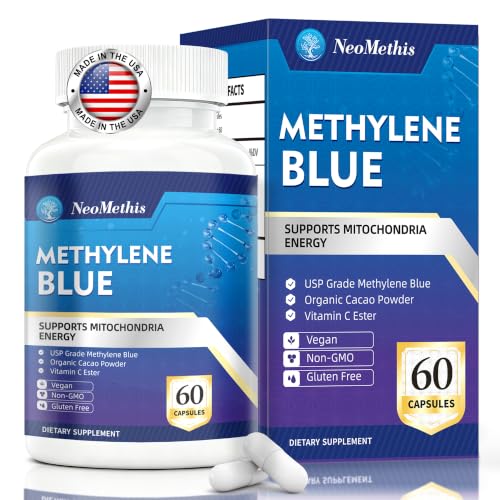
🛒 Where to Buy Methylene Blue
- Troscriptions Blue CannatineLab-tested / studied
sublingual troches, 4 mg methylene blue + 4 mg nicotine + 50 mg caffeine + 200 mg alpha-GPC per troche — Flagship stacked nootropic troche from Troscriptions (founded by physician Ted Achacoso MD); pharmaceutical-grade MB combined with cholinergic and stimulant cofactors; widely regarded as the benchmark MB product in the nootropic community. Confirm drug interaction checklist before use. - Double Wood Supplements Methylene Blue
capsules, 5 mg per capsule — Accessible entry-point brand widely available on Amazon; transparent third-party testing; one of the few capsule-form MB products from an established U.S. supplement company; good for low-dose protocols. - Health Natura Methylene Blue USP Solution
liquid, 0.5% solution, approximately 2.5 mg per 5 drops — Long-standing liquid MB brand; clear USP-grade labeling; 0.5% concentration referenced in historical clinical protocols; glass dropper bottle; available on Amazon. - BulkSupplements Methylene Blue Powder
powder, Variable — sold as raw tested powder; requires accurate milligram scale — Lowest cost-per-dose option for experienced users; lab-tested with published COA; not recommended for anyone new to the compound given the critical importance of accurate low-dose measurement.
As an Amazon Associate we earn from qualifying purchases. Methylene blue grade matters more than price or color: only USP, BP, or EP pharmaceutical grade is appropriate for human use, and aquarium, histology or industrial dye grades are not substitutes. Ask for a lot-specific third-party certificate of analysis with numerical results covering azure B and heavy metals, since a bare percent-purity figure says nothing about the remaining fraction.


A Note on the Evidence
The evidence base for methylene blue as a cognitive enhancer or fatigue remedy in healthy adults is preliminary and largely preclinical; no controlled clinical trials have established efficacy or long-term safety for these purposes. Methylene blue is contraindicated with serotonergic medications, in G6PD deficiency, in pregnancy, and at doses exceeding approximately 4 mg/kg — and is a prescription pharmaceutical, not a supplement. Anyone considering its use should consult a physician knowledgeable in its pharmacology and drug interactions before proceeding. This article is informational only and does not constitute medical advice.
Frequently Asked Questions
How does methylene blue supposedly help with brain fog?
The primary proposed mechanism is that methylene blue acts as an alternative electron carrier in the mitochondrial electron transport chain, helping neurons maintain ATP production when standard chain components are impaired. MAO inhibition — which raises synaptic dopamine and norepinephrine — may additionally contribute to the subjective sense of mental clarity some users report. Both are proposed mechanisms with preclinical support; direct controlled evidence in healthy adults experiencing brain fog does not yet exist.
What does the current research actually show?
Most positive findings come from preclinical cell and animal studies, and a limited number of human trials in clinical populations with specific neurological conditions. Research supports the idea that cellular metabolic disturbances contribute to cognitive and mental health symptoms [1], which gives the mitochondrial mechanism theoretical relevance, but does not establish that methylene blue reliably improves cognition in healthy people with everyday brain fog.
Is it safe to take methylene blue while on antidepressants?
No. Methylene blue is a potent MAO inhibitor, and combining it with SSRIs, SNRIs, or any serotonergic medication can cause serotonin syndrome — a potentially fatal condition. The FDA has issued an explicit drug safety communication about this interaction, and clinical cases have been reported in surgical patients who received intravenous methylene blue while taking antidepressants [2]. This contraindication is absolute.
What is G6PD deficiency and why does it make methylene blue dangerous?
G6PD (glucose-6-phosphate dehydrogenase) deficiency is a common inherited enzyme deficiency affecting hundreds of millions of people globally, many of whom are unaware they carry it. Methylene blue requires functioning G6PD to exert its reducing action; in deficient individuals, it acts as an oxidant on red blood cells instead, causing severe hemolytic anemia. Testing for G6PD deficiency before any use is essential and non-negotiable.
What doses do community users typically report using?
Most community reports describe total oral doses of 0.5 to 4 mg per session — not mg/kg — typically dissolved in water. This is well below the approximately 4 mg/kg threshold at which methylene blue can cause methemoglobinemia. However, accurate dosing at these low levels requires pharmaceutical-grade product and precise measurement, which most commercial offerings cannot reliably provide. There is no standardized or clinically validated protocol for cognitive use.
Why is methylene blue considered a drug rather than a supplement?
Methylene blue is a regulated pharmaceutical in the United States and many other countries, approved for specific clinical indications. It is not classified as a dietary supplement under U.S. law, and it does not meet the safety standard applied to supplements because it carries serious contraindications, documented drug interactions, and a narrow therapeutic window. Products sold online as ‘research chemicals’ or ‘reagents’ are not manufactured to pharmaceutical purity standards and may contain toxic contaminants. Treating it like a supplement understates its risk.
References
- Schwartz L et al. Metabolic shifts, a consequence of hyperosmolarity, are a hallmark of mental disorders. Journal of psychiatric research (2026). PMID 41628532
- Bateman RM et al. 36th International Symposium on Intensive Care and Emergency Medicine : Brussels, Belgium. 15-18 March 2016. Critical care (London, England) (2016). PMID 27885969
These statements have not been evaluated by the Food and Drug Administration. This information is not intended to diagnose, treat, cure, or prevent any disease. Content is for informational purposes only and is not medical advice; consult a qualified healthcare provider before starting any supplement. As an Amazon Associate we earn from qualifying purchases.